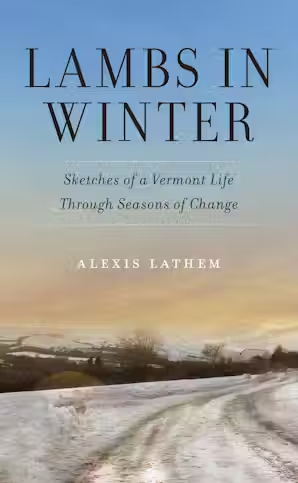
Announcing: Lambs in Winter: Sketches of a Vermont Life through Seasons of Change

University of Massachusetts Press 2025

https://www.umasspress.com/9781625349019/lambs-in-winter/

Finding hope in a small farm, an engaged community, and an age-old connection to the earth

After half a lifetime spent moving from place to place, Alexis Lathem at last settled down with her husband on a small farm near Vermont’s largest city. The lyric essays of Lambs in Winter take readers through the seasonal cycles of raising sheep and hens and growing fruits and vegetables while confronting the challenges of winter storms, summer floods, invasive weeds, and pests and diseases.

Ever conscious of her place in a historically colonized and ecologically degraded landscape, Lathem wrestles with ethical questions that come to many rural dwellers who—following Thoreau—set out to “live deliberately,” in a time of climate crisis, persistent racial inequity, and growing economic inequality. Likewise, she grapples with the moral complexities of small-scale animal husbandry. Through her efforts at self-provisioning, without holding illusions of the self-reliant individual, Lathem finds herself deeply embedded in the community and reliant on others, especially as her region deals with repeated catastrophic flooding brought on by climate change.

Through elegant prose and insightful investigations into pressing contemporary issues, Lathem evokes the world of her farm and the surrounding countryside with a spiritual awareness of the human journey on this earth. Living in place, attuned to the unfolding changes in the world around her, gives her much to grieve, but the pages of Lambs in Winter are luminous with moments of joy and beauty.

Advanced praise for Lambs in Winter:

“Having lived in these northern mountains my whole adult life, I can testify that these are note-perfect accounts of this wonderful, tough and rewarding place. Farming is about many things–stock, and crops, of course, but also other people. And, inevitably, the politics, of everything from immigration to climate. They come together in these pages in a way that will move you and make you both think and dream.”—Bill McKibben, author Radio Free Vermont

“Alexis Lathem beautifully brings together what she calls the ‘yin and yang . . . the domestic and wild’ in this engaging memoir of Vermont farming. These elegant and inspiring essays offer very moving scenes: a lamb’s birth in a terrible snowstorm; baby swallows in a barn; shearing sheep for their ‘haircuts;’ saying goodbye to a favorite ewe. Lathem embraces and dialogues with other nature writers as she moves from a London childhood to New York City to this beloved farm that is her own revelation—she shepherds us and reminds us of our covenant with other animals.”––Brenda Peterson, author of Wild Chorus: Finding Harmony with Whales, Wolves, and Other Animals

“Lathem’s writing is beautifully evocative, giving just enough of the right details to allow her reader to fully inhabit the world she describes. Lambs in Winter is for anyone who enjoys reading about farming and the natural world.”—Jane Brox, author of In the Merrimack Valley: A Farm Trilogy

“An engaging and poetic narrative, Lambs in Winter tells a compelling personal story while offering insights into urgent social issues, from the ethics of animal husbandry and meat eating to the plight of migrant workers, personal relationships to the land and the widening impacts of climate-related disruptions.”—Brian Tokar, coeditor of Climate Justice and Community Renewal: Resistance and Grassroots Solutions

Posted in Uncategorized | Tagged , , | Leave a comment

Our Total Eclipse

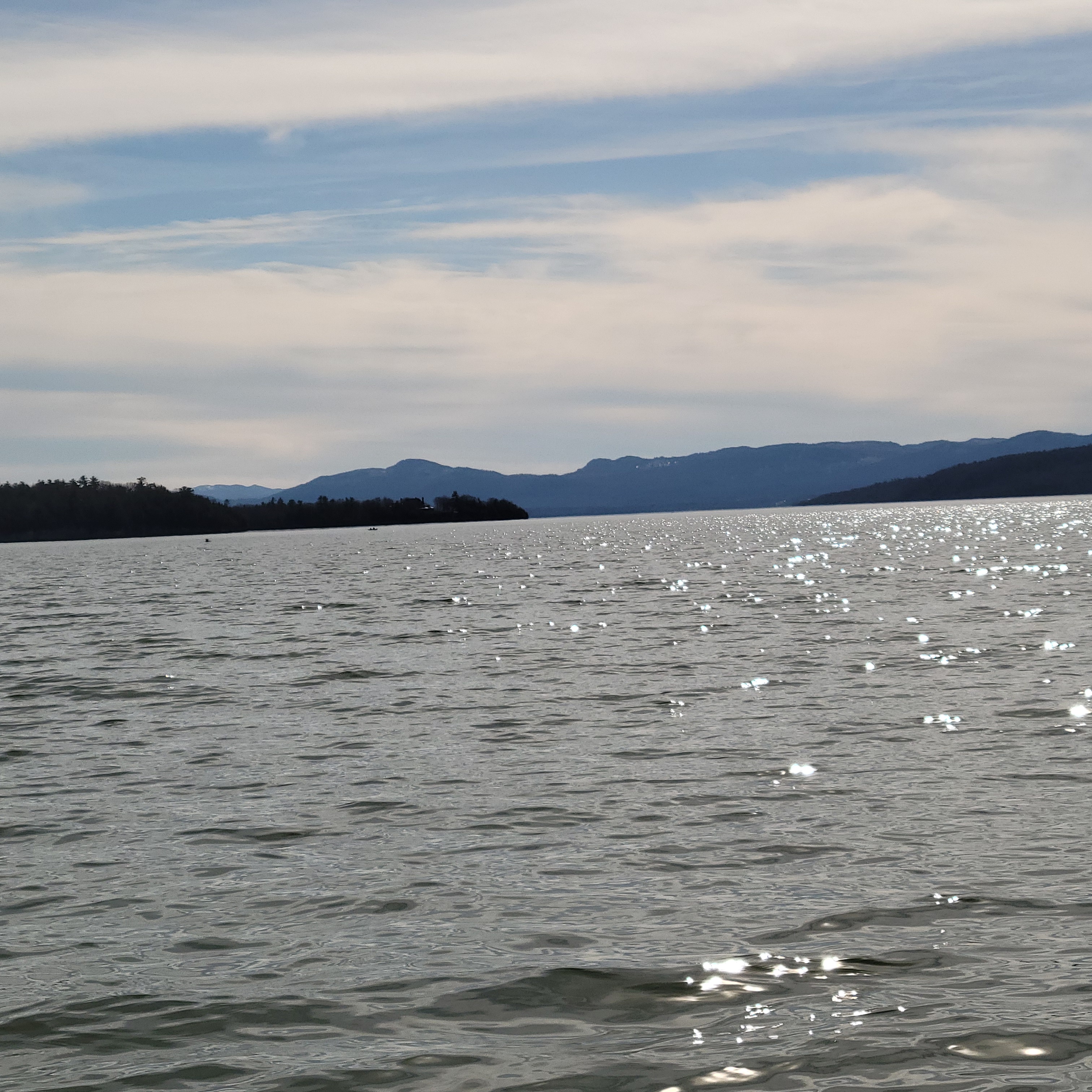
Headed out onto Lake Champlain to view the total eclipse.

April 8, 2024.

It was a kind of gestation period. The expectation. The growing reality of it, as the day approached, until you could feel it kicking inside of you. And when it arrived, it was like life had broken through a shell. It was not anything like what we’d been told, over the centuries –darkness, death, plague. The opposite was true.

Earlier in the gestation period, Art and I thought about going out onto the middle of Lake Champlain to experience the total eclipse. We wanted to be under a vast expanse of open sky, and mountaintops are mostly off limits in mud season. But then I thought it might be too terrifying to be floating in a tippy canoe over water hundreds of feet deep. Cold water, with no one else around, as the last patches of snow and ice still clung to the end of winter. I would not be able to grab hold of Art’s hand when the moment came.

Continue reading in Lambs in Winter: Sketches of a Vermont Life through Seasons of Change (University of Massachusetts Press 2025)

After, the sun is still partially eclipsed.

___________________

Referenced: Annie Dillard, “Total Eclipse.” In The Best American Essays of the Century, ed. Joyce Carol Oates. New York: Houghton 2000. (p. 476-489)

ReplyForwardAdd reaction
Posted in Uncategorized | Tagged , , , , | Leave a comment

Staying Cool

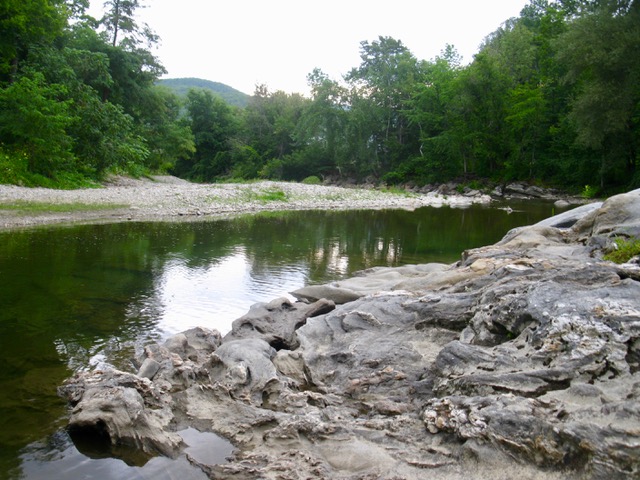
It has been very hot all week. I go out to the garden only at night to water the young plants; this keeps them alive, but still, they do not get a really good drink the way they do from a good rain. The garlic tops are turning yellow, the pea trellises look unhappy. At night we open the windows to cool the house and in the morning we close them; the house stays cool most of the day this way, but not when it is in the nineties. Not when it is this hot, day after day.

Continue reading in Lambs in Winter: Sketches of a Vermont Life through Seasons of Change (University of Massachusetts Press 2025)

Posted in rivers, swimming, Uncategorized | Leave a comment

A Pandemic Journal


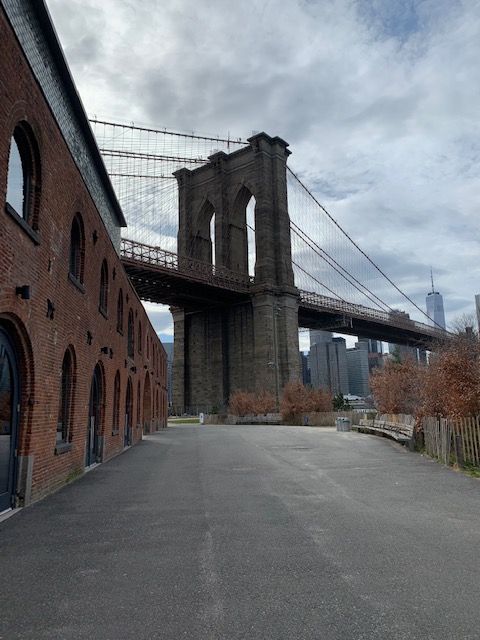
A deserted DUMBO, where my sister and her family are in isolation.

It has been more than a month and I have been to town only once, to mail some packages. I live in the country, where the stay-at-home order does not feel so confining, only strange. And sad. To live inside a circle of life, watching the seasons turn, apart from history, which comes to us on the radio not like a distant foghorn, but like a blaring siren inside our living room. I cannot shut it off. I talk with family members almost everyday who are sheltering inside their Brooklyn apartment, all of them sick, and feel as if my hands were bound. I would endure this time of seclusion with more grace if I did not feel so useless, so removed from the overflowing hospitals and the city of my childhood where so many are sick and dying.

We are boiling sap on our woodstove as we do every year, planting seeds indoors for this year’s vegetable and flower gardens. The end of winter always comes slowly, but this year time is distended, fraught by strangeness and necessary hope. We had a few days when the sun was out, the crocuses up and early daffodils; we turned over the compost piles and cleaned up winter’s debris. And then a cold rain came, falling to the earth like so may thrust spears. More darkness, more winter.

For a long time I associated spring with death because my mother died in spring, and so did my brother. We held his memorial in Washington DC, where he lived, while the cherry trees were in bloom. The magnificence of color hurt my eyes; I blinkered through the lengthening days in my grief. After so many years, this association has faded a little. But we will never forget this time, all the burials, the intensity with which we watched for the lilacs to leaf out, listened for the song of the white throated sparrow, waited for permission to resume our lives again.

Usually at this time of year we are lambing on our farm. But we chose not to do this anymore, at least for a while. I did not know, of course, when we made that decision, that come spring, we would be forced to stay at home; that this would be a time when new life would have brought much-needed delight. More life. I look out at the paddock where I should see tiny lambs standing beneath their wooly mothers, their little tails trembling, while the ewes raise their chins into the air, as if whistling a familiar tune. I miss them.

I chose this life because I have never had much confidence in a precarious, bloated economy of global supply chains, credit default swaps, technological dependency, two-thousand-cow dairies, and over-specialization. Instead, it is the rhythms of a rural life –collecting sap in buckets, cutting wood for the stove, caring for animals – that are more reliable. When everything else is failing, these do not fail us, cannot fail us. John Berger wrote that when the animals are gone, it will be “their endurance we [will] miss.” An old ewe dies, but she has “already lambed her permanence.” It was the same ewe, forever and forever, her milk flowing into eternity, the lambs arriving year after year. Animals, who have always been with us, are our link to the past before the past. By caring for them, for the soil and the forests, the carbon and nitrogen cycles and the rain, we are keeping forever alive and this is surely not useless.

Spring will be here soon.

The good news is that CSA subscriptions and farm stand sales have doubled in recent weeks. Local food, honestly grown, is something we can trust, and if we want our farms to be there when we need them, we better support them now. Meanwhile, the mega-dairies are dumping milk as prices are in freefall. I am reminded of those images from the Great Depression of mountains of surplus grain, farmers burning corn and, yes, dumping milk by the roadsides. These became our symbols of the cruelty and insanity of unbridled capitalism, of allowing the Invisible Hand to control our lives and to grab us by the throat. The Vermont legislature is considering emergency rules for putting a floor on milk prices – so that prices don’t go below a farmer’s cost of production – and for distributing milk surpluses to kids, food pantries, and shelters. These were the kinds of policies put in place by the New Deal, and over the decades since have been dismantled chip by chip. And here we are again.

It is hard to see how we will ever go back to the way things were. Putting a floor on milk prices so a farmer doesn’t lose money by working seven days a week to feed us, and buying agricultural surpluses to feed the hungry – is this something that will ever make sense not to do? Will we go back to mass evictions of poor black single mothers and their children? Throw the homeless back on the streets? Can our system of medical apartheid really continue after this? This pandemic has made visible to all the faults in the system, the gross inequalities, so that they can no longer be denied.

The other day Art was looking through some boxes for some old photographs and found a newspaper clipping from 1979: “Use of fossil fuels called threat to world climate.” The story appeared on page D1 of the New York Times. Even a magazine printed a few weeks ago arrives in our mailbox as if it were sent to us from a distant past, as did this newspaper clip. The world before corona. I worry that the climate threat is once again pushed back to page D1, although we know now that the effects of fossil fuel burning will not wait two hundred years, as the professor thought in 1979. That they are already here, and that climate change will bring more pandemics, more economic disaster, and will kill many people. We will have to reckon with the knowledge that, once again, it is only in times of economic contraction that emissions decline.

I worry that the climate threat will always be pushed back to page D1 because there is always an immediate crisis, because people need to eat, to work, to live, while the earth is more and more diminished and ecologically disturbed, meaning that there will be more crises, more unmet needs. A forest, writes David Quammen, “with its vast diversity of visible creatures and microbes, is like a beautiful old barn: knock it over with a bulldozer and viruses will rise in the air like dust.” We have been warned.

Friends and family members tell me they are rereading those plague-themed books, like Camus’ La Peste, and Love in the Time of Cholera. I am rereading Angels in America, and grieving for the millions who died of AIDS while the world was indifferent. We did not, as a collective, stand in our doorways to bang pots and pans at seven o’clock. The stars did not go out, we did not pack up the moon and dismantle the sun. I want to believe that the near universal solidarity we are living right now will not fade away, that it will change us, deepen our powers of empathy; that the circumference of our sphere of care will expand in time and space, to include the past, the far away, the seventh generation, the neighbor we never knew. The animals, too, who are our permanence, our forever.


Posted in climate change, coronavirus pandemic, lambing, sheep, shelter-in-place, Uncategorized | Tagged , , , , | Leave a comment

Spring Surprise


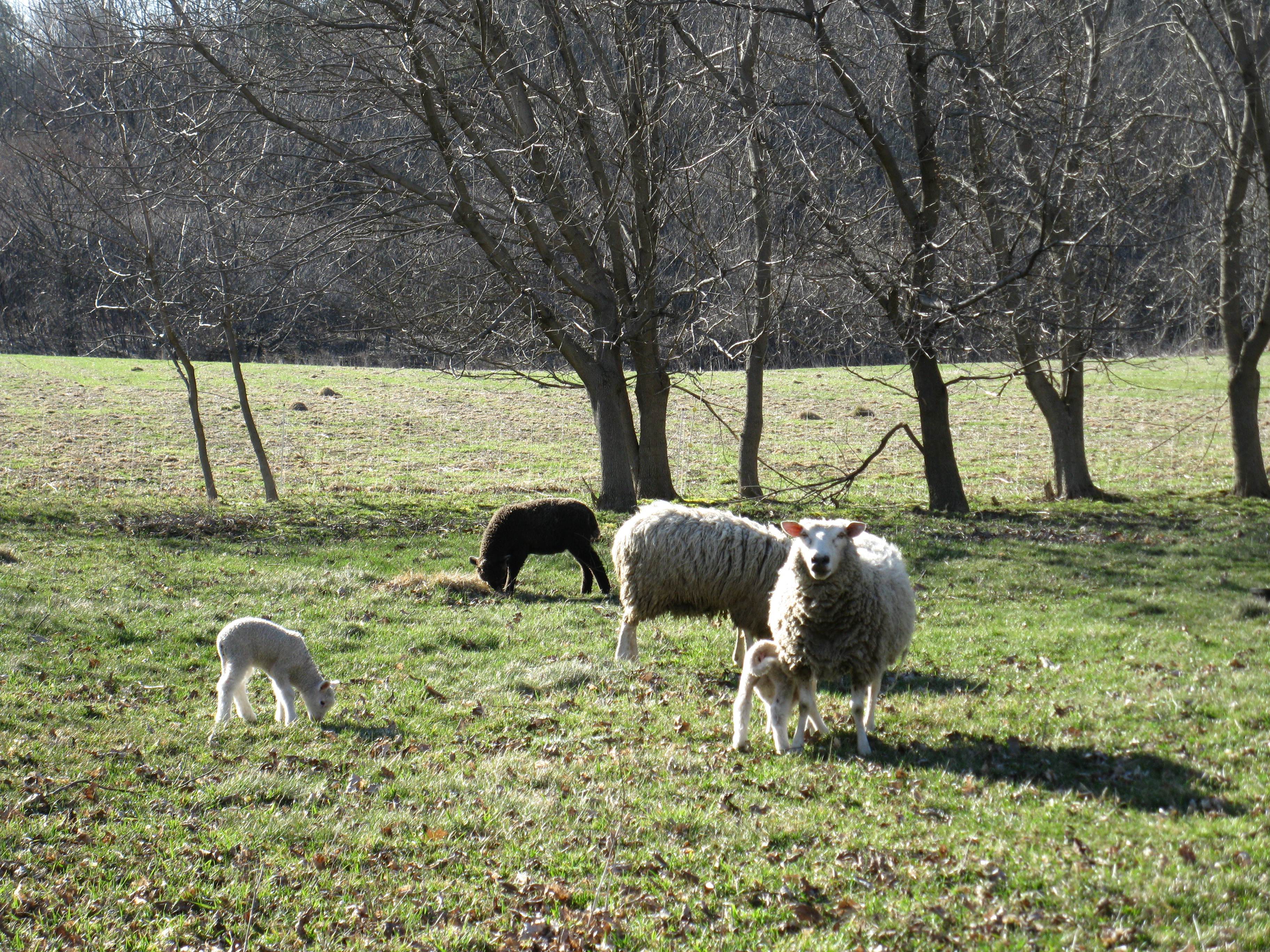
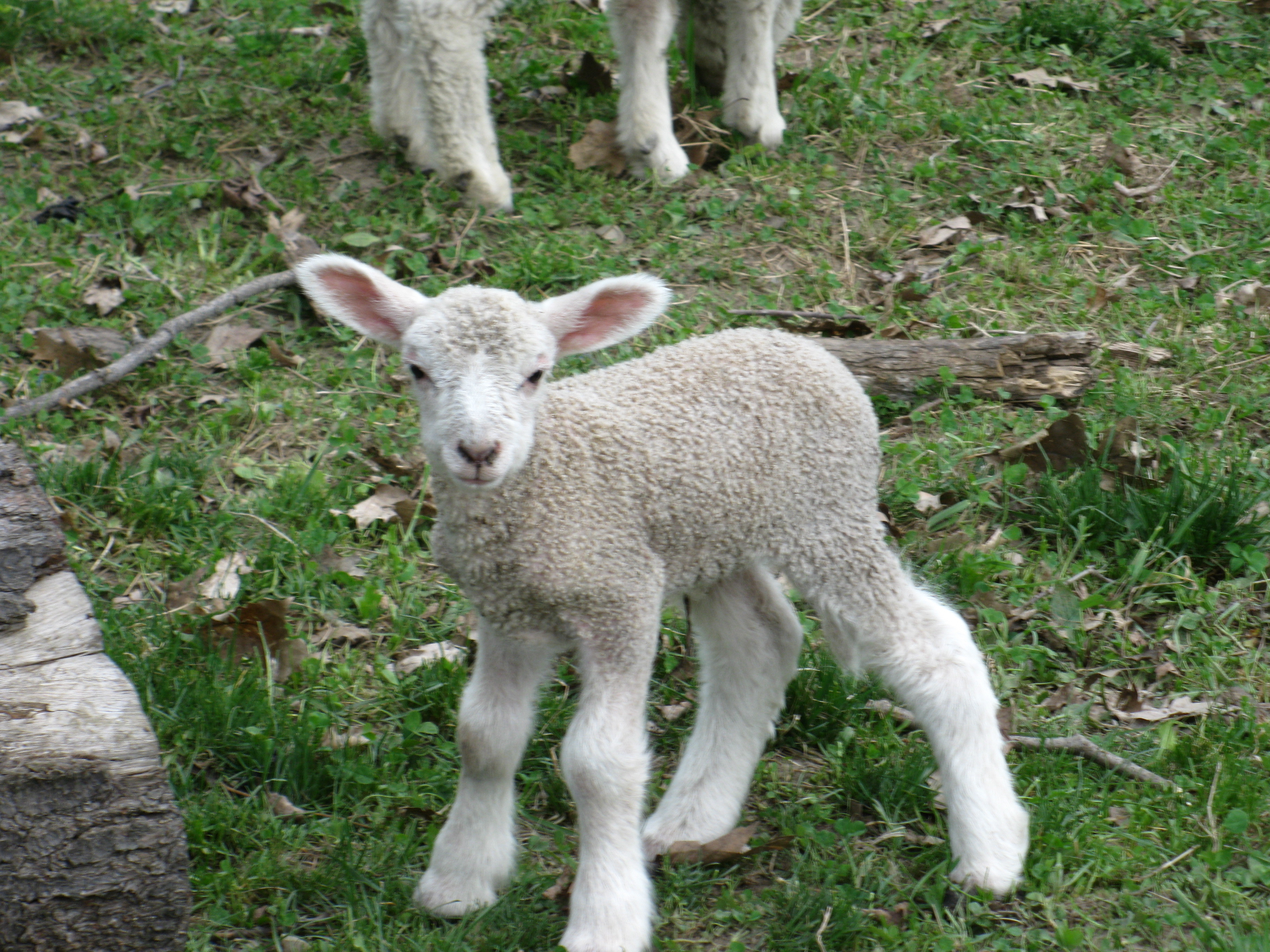
We were not expecting lambs this year.

After last year’s horrible lambing season – followed by a drought ­– we decided not to do this anymore. Last year, as if in a conspiracy, all the ewes decided to take care of only one of their twins – and all of them, save one, gave birth to strong healthy sets of twins. Thus we had, at one point, five bottle lambs at the same time – a record for us, by far. And almost all the lambs were rams – another conspiracy.

And then the lambs arrived. I was not all that surprised (though I hoped not) as the ewes looked very pregnant to me (it is hard to tell under all that wool). It is not unknown for the rubber band to fail – the method we use to neuter our ram lambs. This year, those same ewes who rejected their second-borns last year are this time taking devoted care of all their twins. One ewe even had triplets.


…Continue reading in Lambs in Winter: Sketches of a Vermont Life through Seasons of Change (University of Massachusetts Press 2025).


Back scratching.


Posted in Uncategorized | Leave a comment

The Wild and the Domestic: Introducing Soays

Green Gardens.

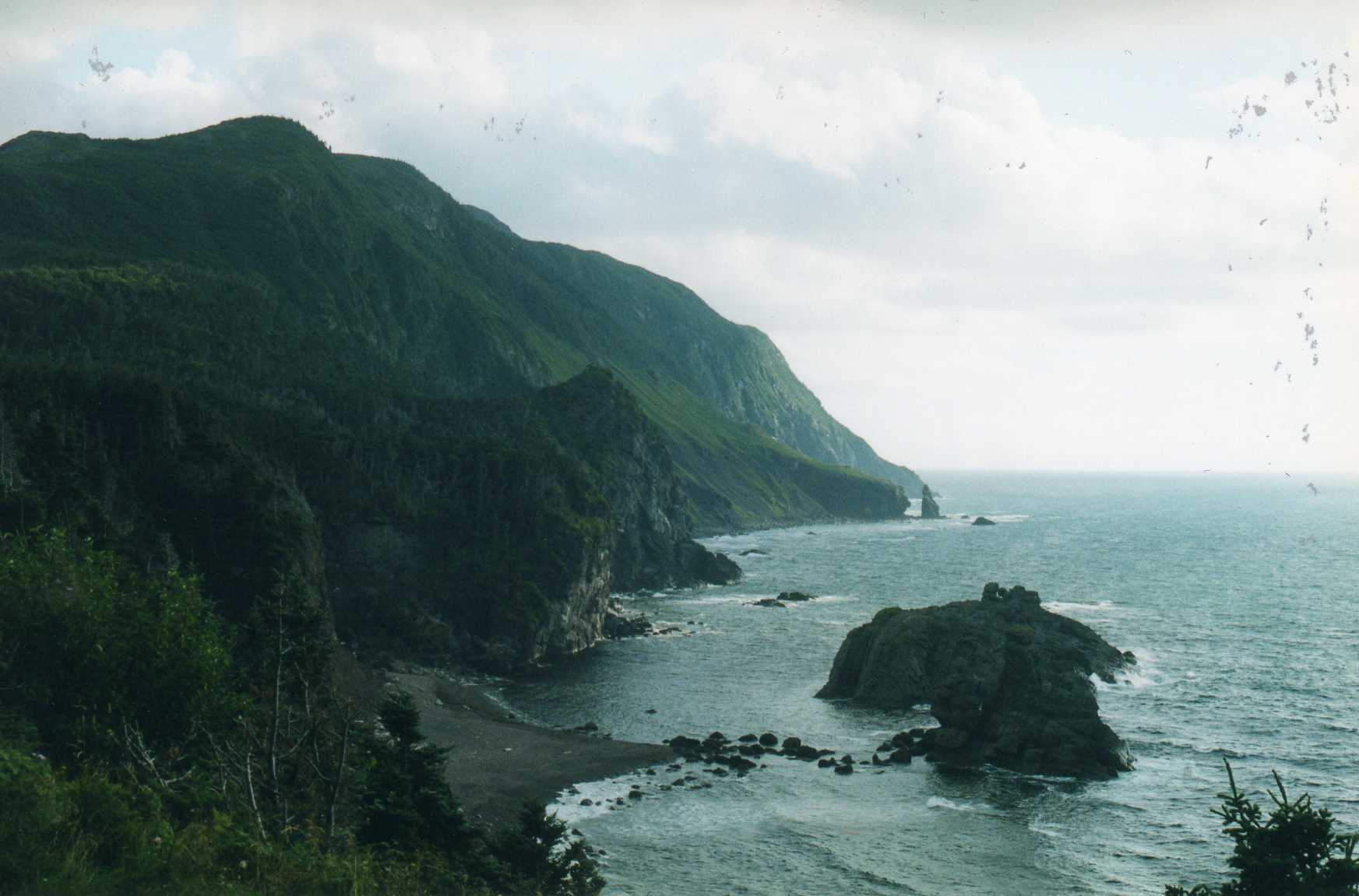
Years ago Art and I visited a place in Gros Morne National Park in Newfoundland, called Green Gardens, a spectacular stretch of volcanic coast with stupendous coal-dark cliffs crowned with lush, velvet-green meadows and wind-twisted spruce trees. We camped for two days under a half moon that lit the sea foam below as it swirled in and out of sea caves and skirted tall stacks of lava pillows.

The cliff-top meadows were once summer pasture for sheep, who still grazed there, though the farms and shepherds were centuries gone. It was a sheep’s paradise, who would select the high points with the best views, we noticed, and bed down at night under the giant white pines. The scotch thistle flowers were in bloom, forming pink banners rippling in the ocean breeze. Lovely, except that the thistle, a plant that the sheep won’t eat, was therefore taking over. The sheep were in effect selectively grazing themselves out of a habitat.

That was ten years ago, when we weren’t yet worried about thistle taking over, as we are now. Green Gardens served as a warning. Little by little, another variety of thistle, introduced here when the Monitor Barn was removed, was becoming a problem. This kind does not even have a pretty pink flower, but rears its thorny head like a pair of ugly fangs. Everywhere. Especially around the footprint of the former barn. It is proving to be inextinguishable. We even saw it grow up through a great big pile of wood chips, as if it were clawing its way straight out of hell.

And then, another invasive grass that the sheep won’t eat– we call it the jaundice grass for its sickly yellow hue – was becoming even scarier.

We considered introducing a pair of goats. But that would involve some serious fencing, if we hoped to have a tree left standing. I shuddered to think what they could do to all the hard work of the farm crews and volunteers next door. Not to mention our laundry.

Then we learned about Soay sheep.

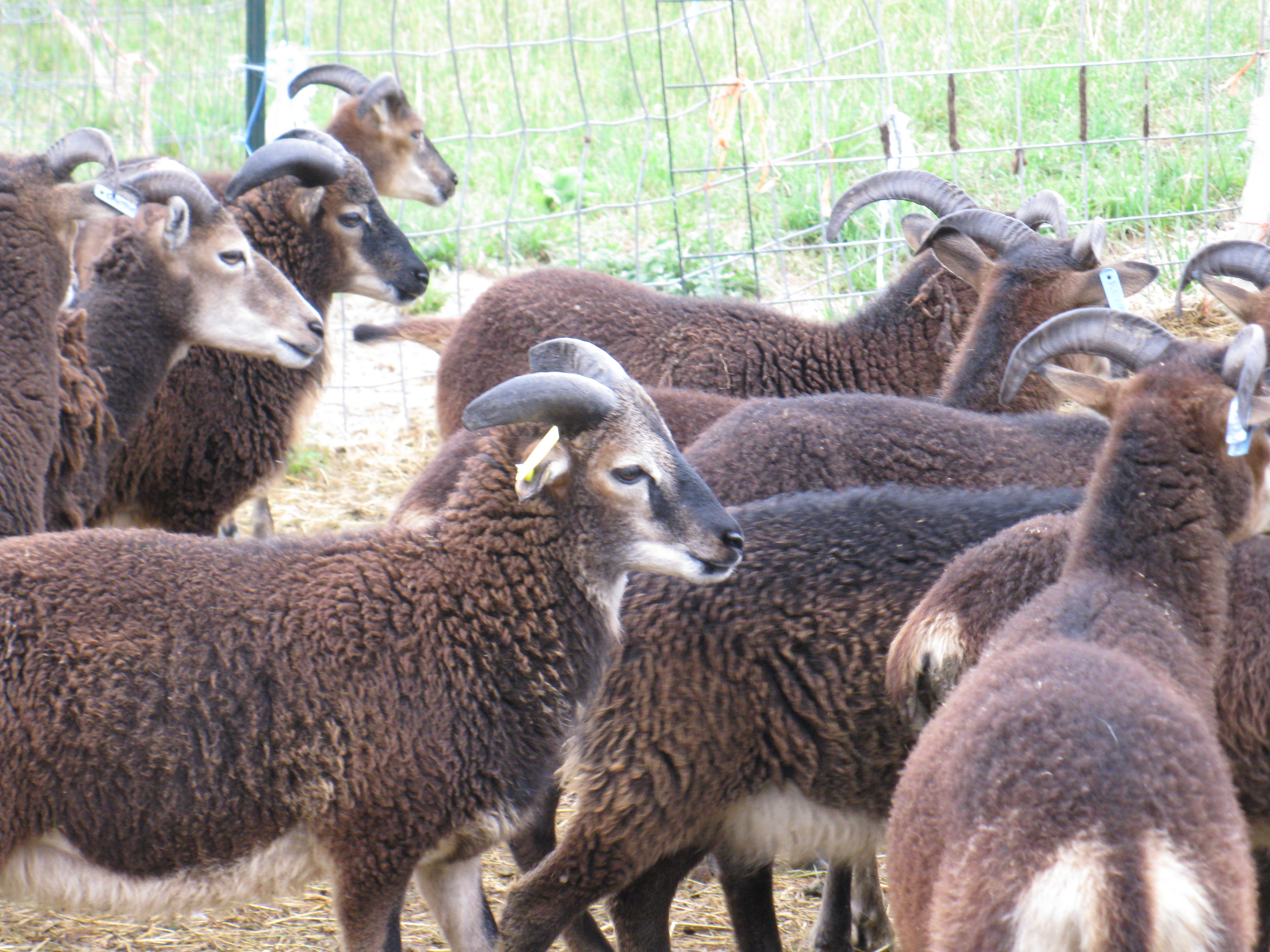
Soays are a rare breed of primitive sheep that were isolated for two thousand years on an island in the Hebrides. They are thought to be close to the earliest domestic sheep herded by Bronze Age shepherds. They are small, and horned, and resemble deer rather than ovines. Having lived on an island – not unlike the cliff-top meadows of Newfoundland – they would have learned not to be such fussy eaters, once there was nothing left for them to eat but thistle. Soays do not need shearing, for they shed their fleeces naturally, nor nail trimming, and even the rams are gentle, unaggressive creatures which means they don’t need to be separated from the flock. They are a good choice for farmers who are reluctant – as we are – to intervene too much in the lives of our animals, but rather to live with them in a spirit of mutualism. You give me water. I give you wool.
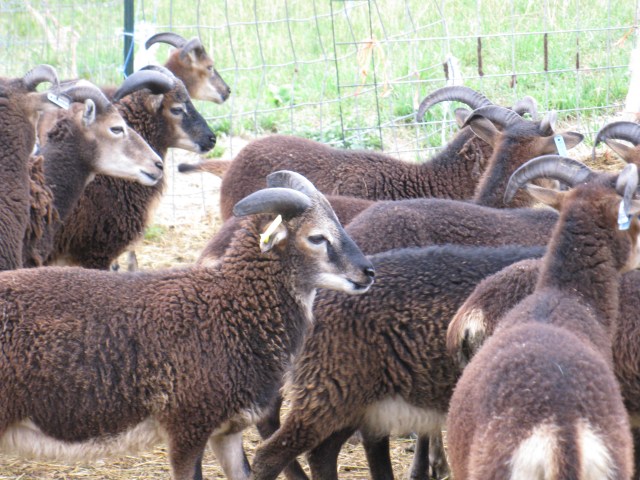
Soays at Soli Deo Gloria.

The day came to pick up a pair of Soay wether lambs from the Soli Deo Gloria farm in Whiting. We caught our first glimpse of them in the field – whom I might have mistaken for deer, except for the way they were so tightly flocked together. The farmer led them into a corral, and as he tried to grab one for us, they moved swiftly, swirling around him in a blur like a school of fish around a diver. “They’re impossible to catch,” he said. As we were soon to learn.

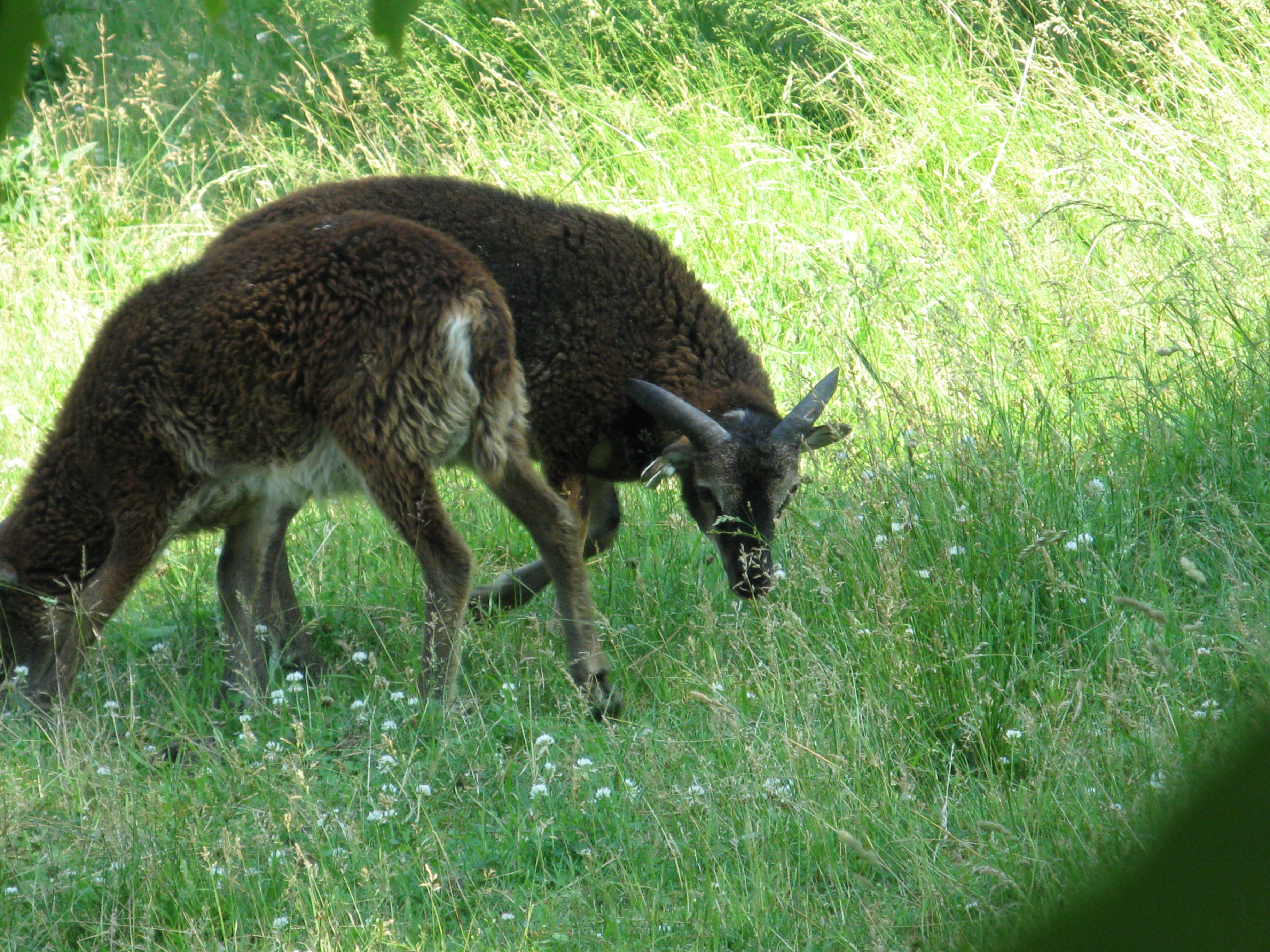
We brought them home in a U-haul mini-trailer and let them out in the paddock to mingle with the other sheep. They retreated to a hidden corner of the paddock behind the barn, where I stood and watched them for a while and who, in their shyness, returned my gaze. These are animals who will remain calm in your presence, and seem to be as curious about you as you are about them, as long as you move slowly and make no hint of giving chase. Their curved horns sweep back from their faces, marked with white swooshes of war paint, giving them a noble look.

I was excited to observe them over the next few days to see how they would adapt to their new home.

But the next morning, Art woke me up, saying, “They’re gone.”

I got dressed and followed Art down the road and into a thicket of poison parsnip running into a ravine, where the lambs were last seen. We walked up a little streambed into the woods and came out at the edge of the VYCC farm. No sign of them.

Paul Feenan, the farm program director, was there with his youth crew, giving the teenagers instructions on their morning’s task. Never missing an opportunity for a teaching moment, he said, “Let’s introduce Art and Alexis.”

He explained that we are the ones who live next door, with the sheep. “They help us out sometimes, and we help them out at times. Right now is one of those times.”

We explained our situation, and described the lambs to them. “They look like tiny antelopes,” I said.

“What’s an antelope?” one of them asked.

As it turned out, we were very lucky that the crew happened to be working there that day, who would keep an eye out for our lost lambs.

We bushwhacked through the jungle again, but still no sign of them. Only a few of their tiny triangular prints in the dirt where they entered the ravine. The understory was dense with tall weeds, and the woods merged into the town forest and continued on towards Canada. We despaired that we would never find them, and even if we did, as the farmer said, “They are impossible to catch.”

Later that day, I received a phone call from Cae at the VYCC. “Our crew has spotted your lambs. They were seen poking their heads out of the woods. Brown. With horns.”

I ran back and there they were, out in the open, noses to the ground like a pair of brown dogs sniffing around. I followed them for a while, slowly, as they made their way down the path at the edge of the woods, and then meandered into the tall weeds where they munched happily on leaves from the low-hanging bough of a box alder. They looked at me, and we exchanged gazes again, and they went on grazing. Like Jane Goodall and her chimps, they accepted my presence as I lingered and observed.

I had no way to get them home, of course, but it was a source of hope that they had stayed nearby, and did not take off into the deep wilderness, as we had feared. When Art returned from work, we went back to the same spot and found them again, their war painted faces visible through a slight gap in the weeds, like an image from a Henri Rousseau painting. It seemed fitting that these creatures, at the confluence of the wild and the domestic, should find themselves on the line between forest and farm. They would have everything they could ever want here, I thought – water, shade trees, and good browsing. Everything but a herd.

They were, to our horror, choosing to bed down in the exact place where we feed the coyotes.

However unlikely our success, we would have to try to grab them.

Our plan was for one of us to come around from behind and flush them out of the weeds where Art and Cody – a neighbor who came to help us – would grab them. “Their horns make good handles,” the farmer had said.

I crashed through the tall goldenrod and then crept up the streambed and climbed a bank to reach them. To my surprise, they did not notice me until I was standing over them. They looked up at me with those sweet faces, and before I could apologize– they bolted. I grabbed one – but the other got away. He went bounding past Cody and Art up the path toward the lean-tos, graceful as a deer, and then leapt into the woods and vanished. That was the last we saw of him, although we looked and looked, for two days.

I got to know the edge of the woods, the little streambed, and the new farm crew and apprentices, who were by now all invested in helping us to find our lost lamb.

I could not help but think about him, scared and alone, and possibly lost, in the deep woods. As I focused on my tasks – in the garden, the kitchen, or my desk – those woods were at the periphery of my consciousness, a mystery that would never be resolved. The endless possibilities – some hopeful, some horrific – turned over and over in my mind. Nature, I know, has its cruelties, but we were responsible for this lamb, whom we wrenched from his family, grabbed by the horns, and brought to this strange place with its gang of bully-ewes. In truth, I do not like animal husbandry with all its little brutalities – the wrassling, the chasing, the penning-in. And so much death. There are times when I wonder why on earth we are doing this; this was one of those times.

Meanwhile the lamb we brought home settled in. It took only a day for the other sheep to accept him – they were mean to him at first, which is probably why the Soays ran away– the new lamb eager to become a part of the group. Seeing how closely he stayed with the herd, I was hopeful that the other lamb would find his way back to his brother.

He did. After two nights alone in the woods, one of them in the pouring rain, he made his way across the open farmland under the cover of a morning fog.

We opened the gate for him, and watched as the settled lamb led him proudly, like a college senior showing the way to a freshman, into the barn.

Now the two of them are together again, inseparable, and show no inclination of running away. These gentle creatures are teaching us to be gentle ourselves, who will never again give them chase, and should never have reason to use their horns as handles, as they live out their lives here in peace.
IMG_4906

Posted in feral sheep, Soay sheep | Leave a comment

Autumn in Vermont

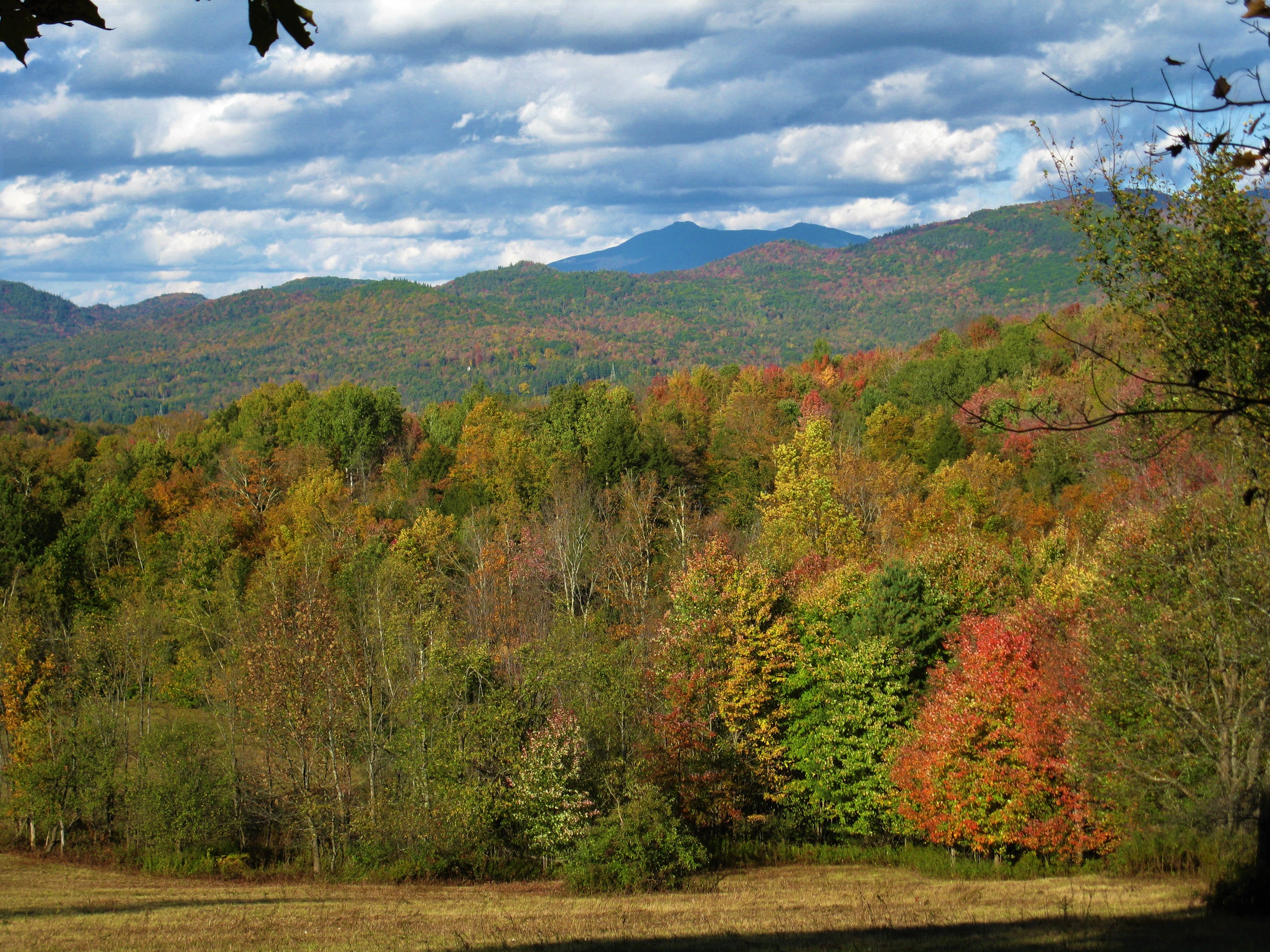
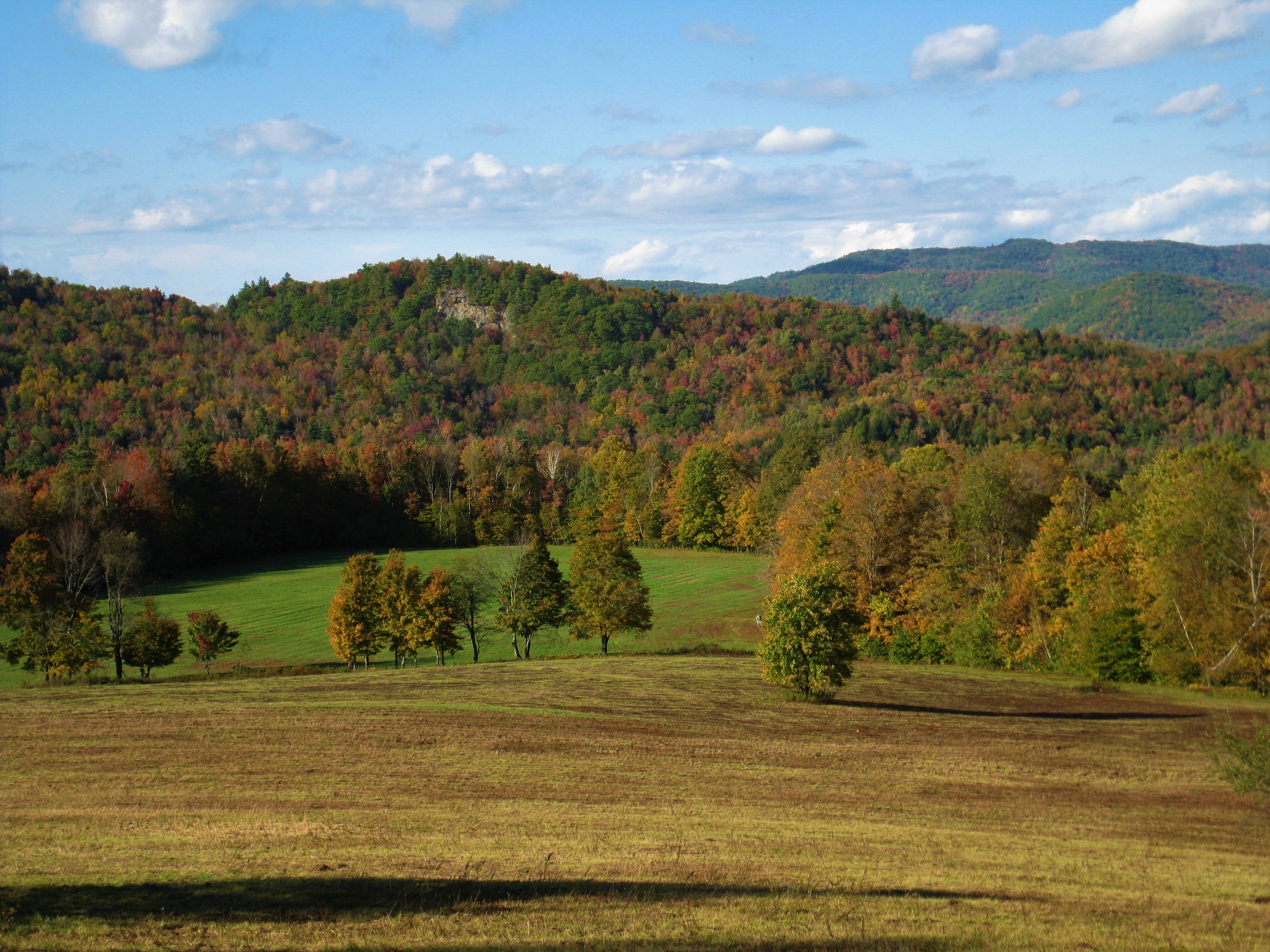
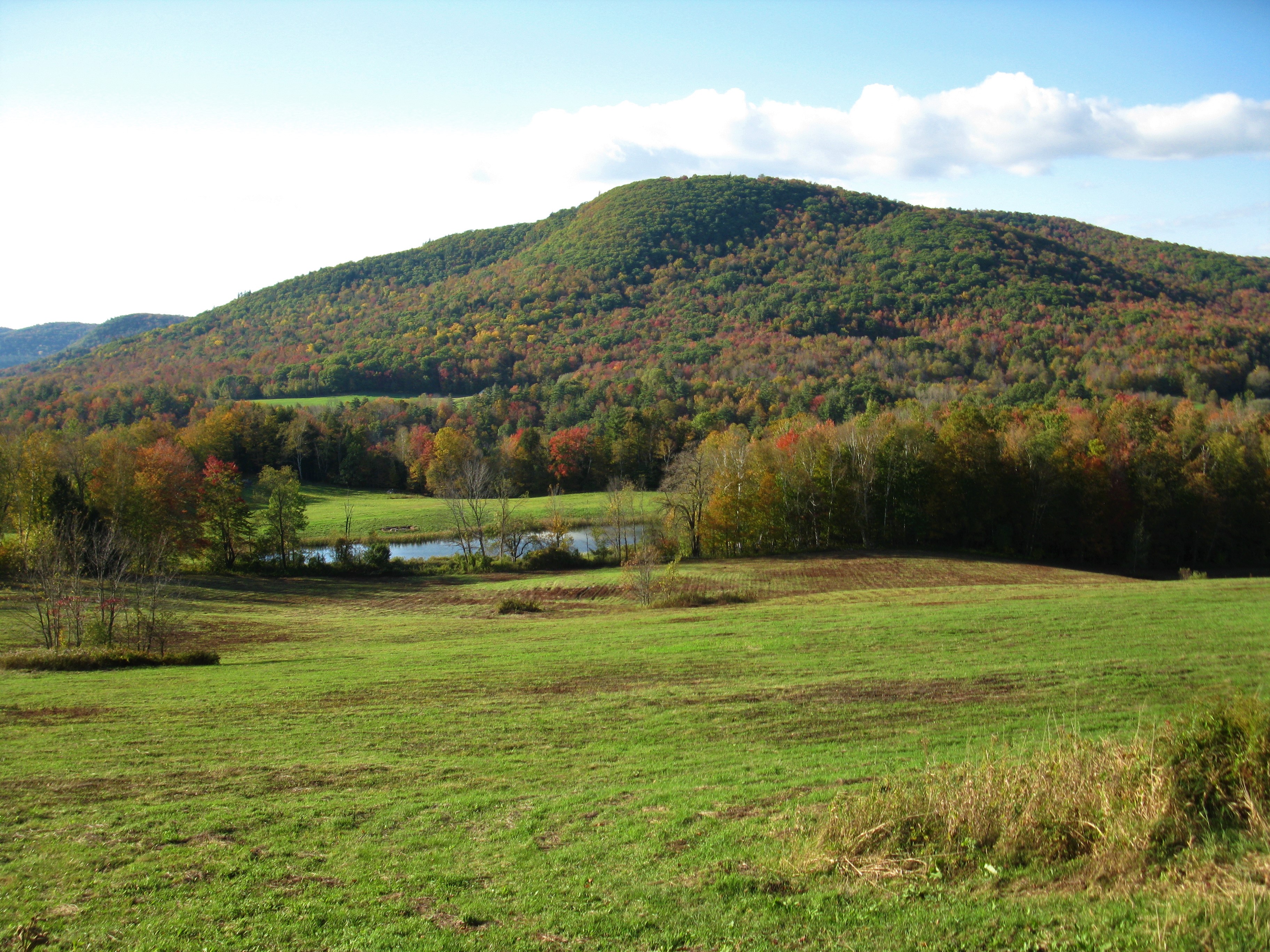
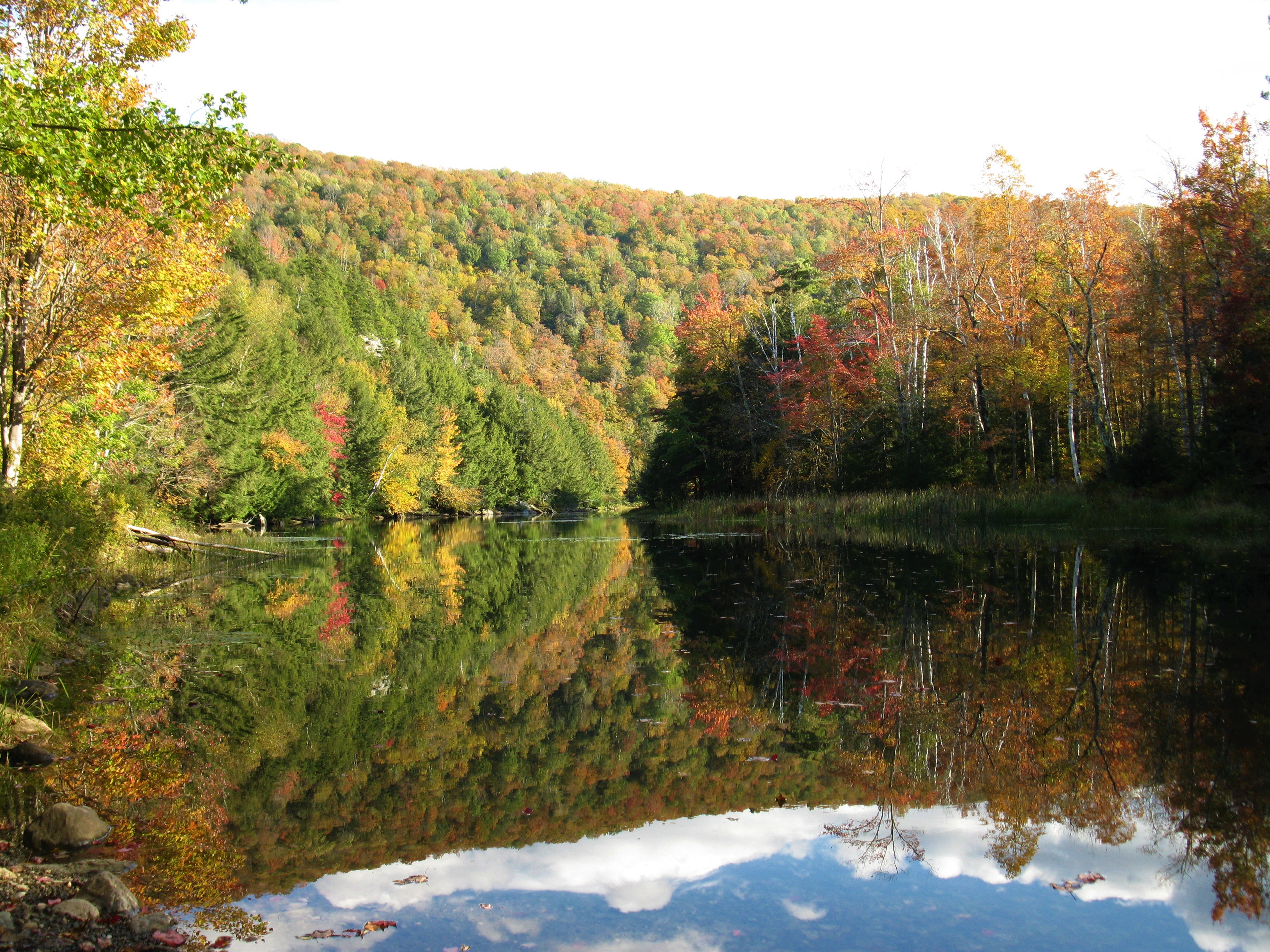
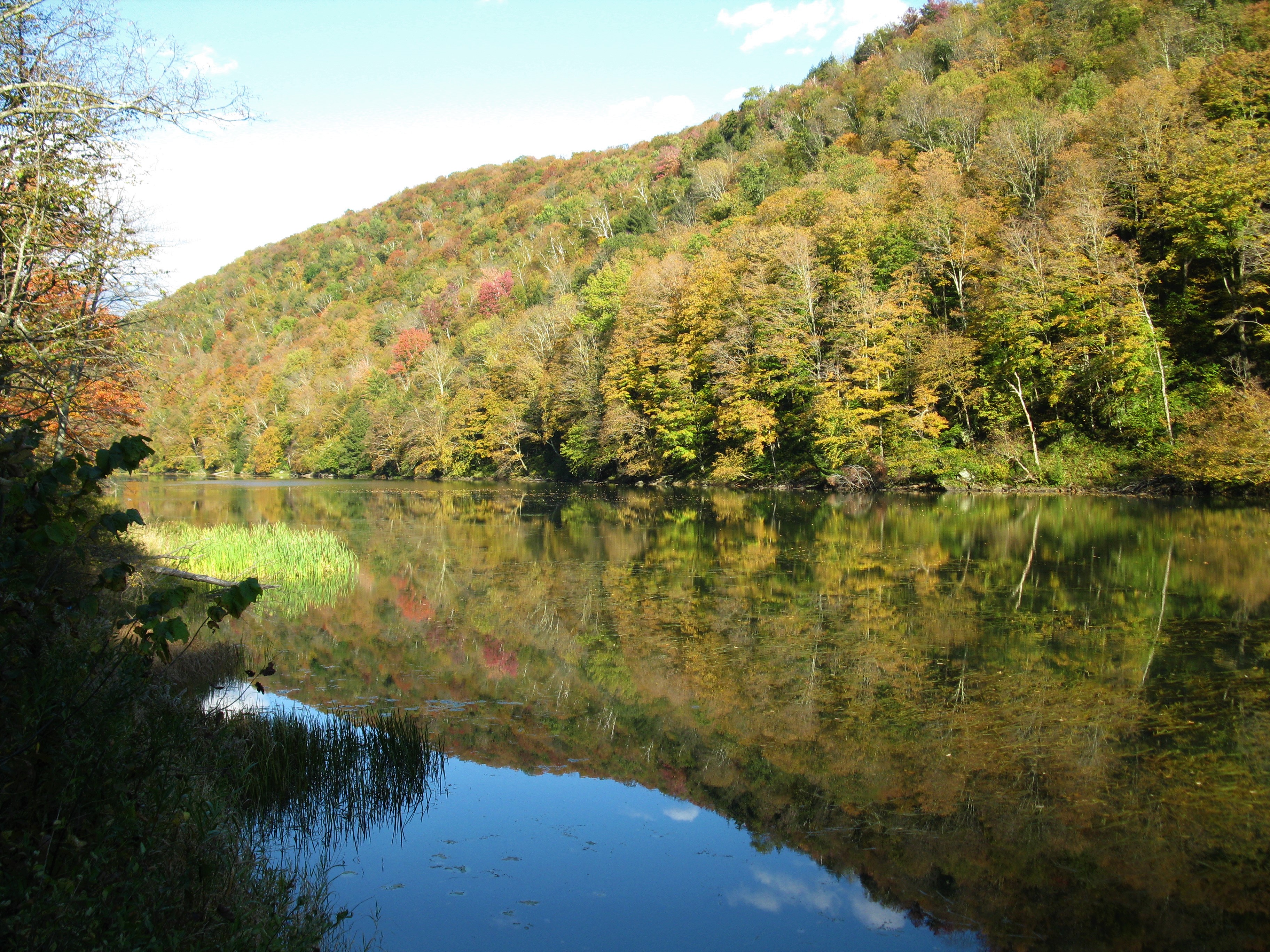
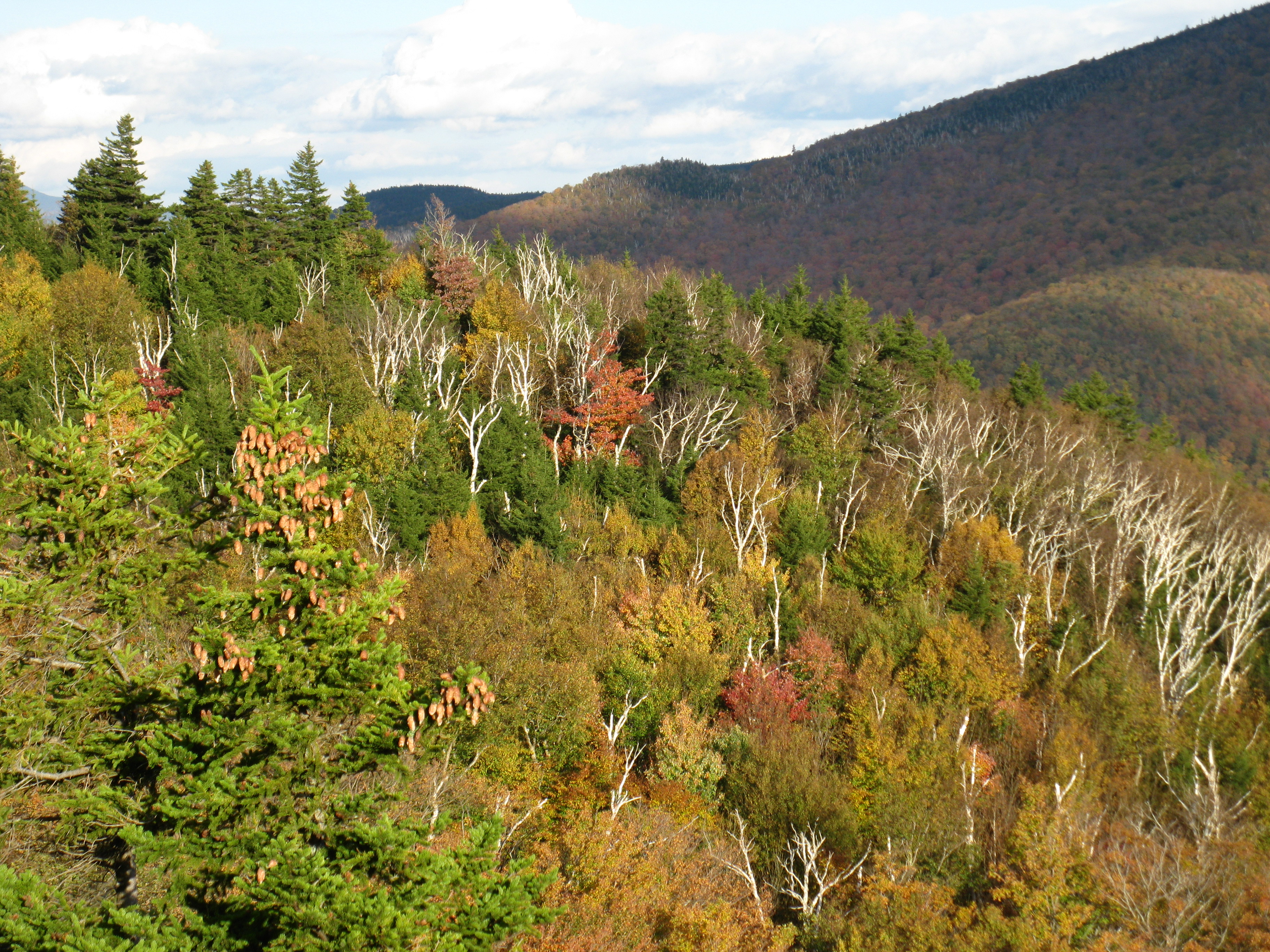
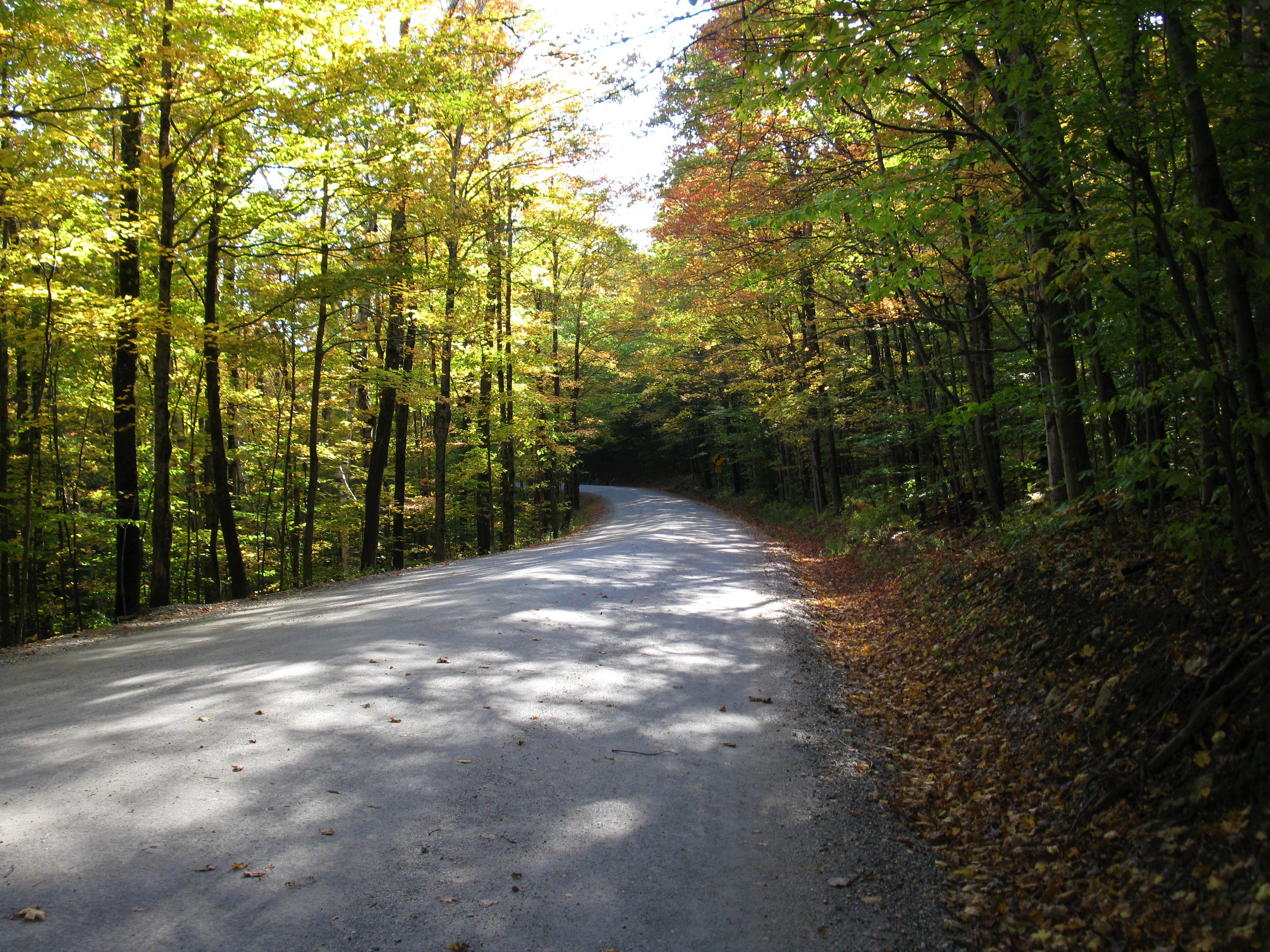
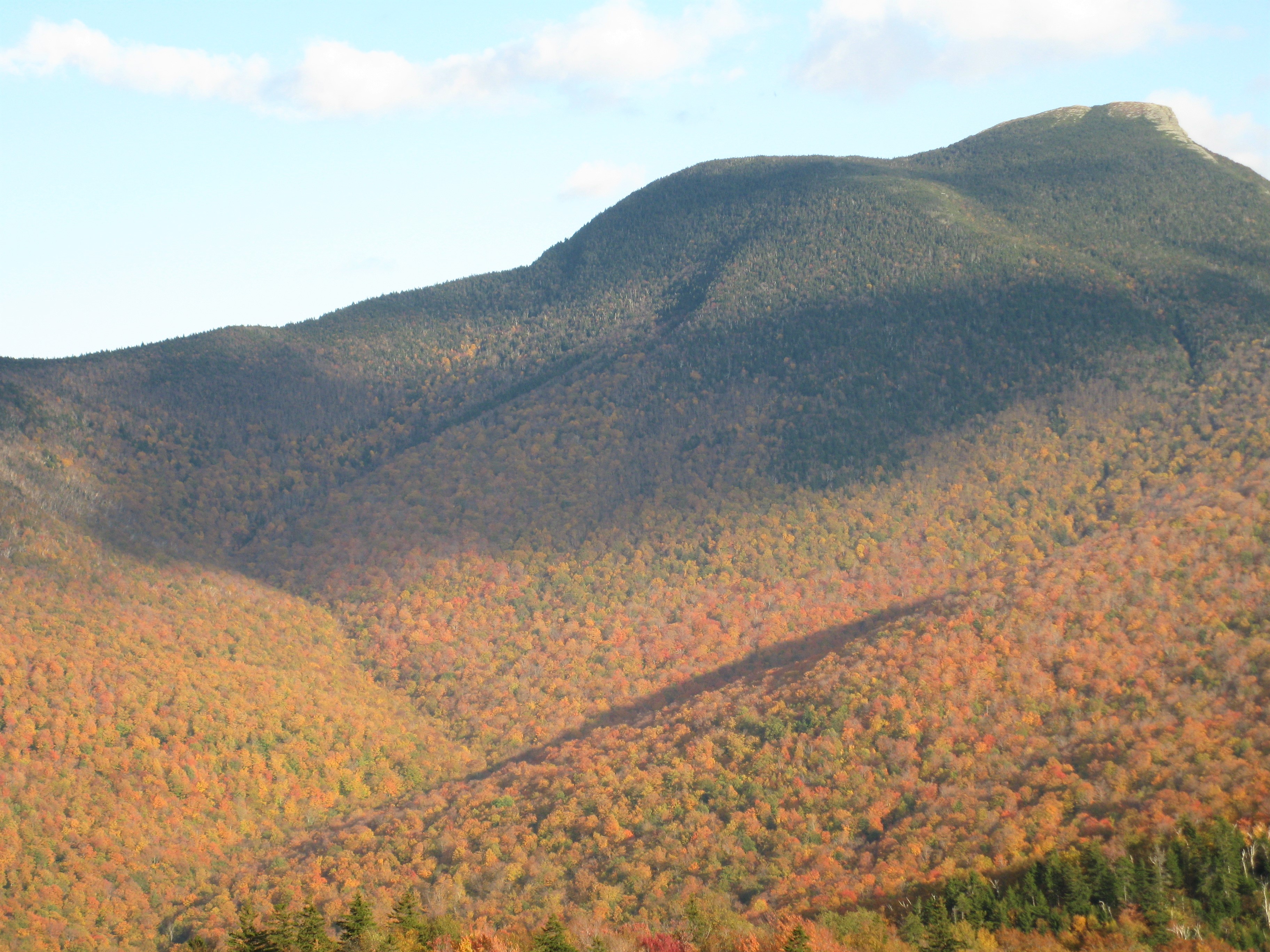
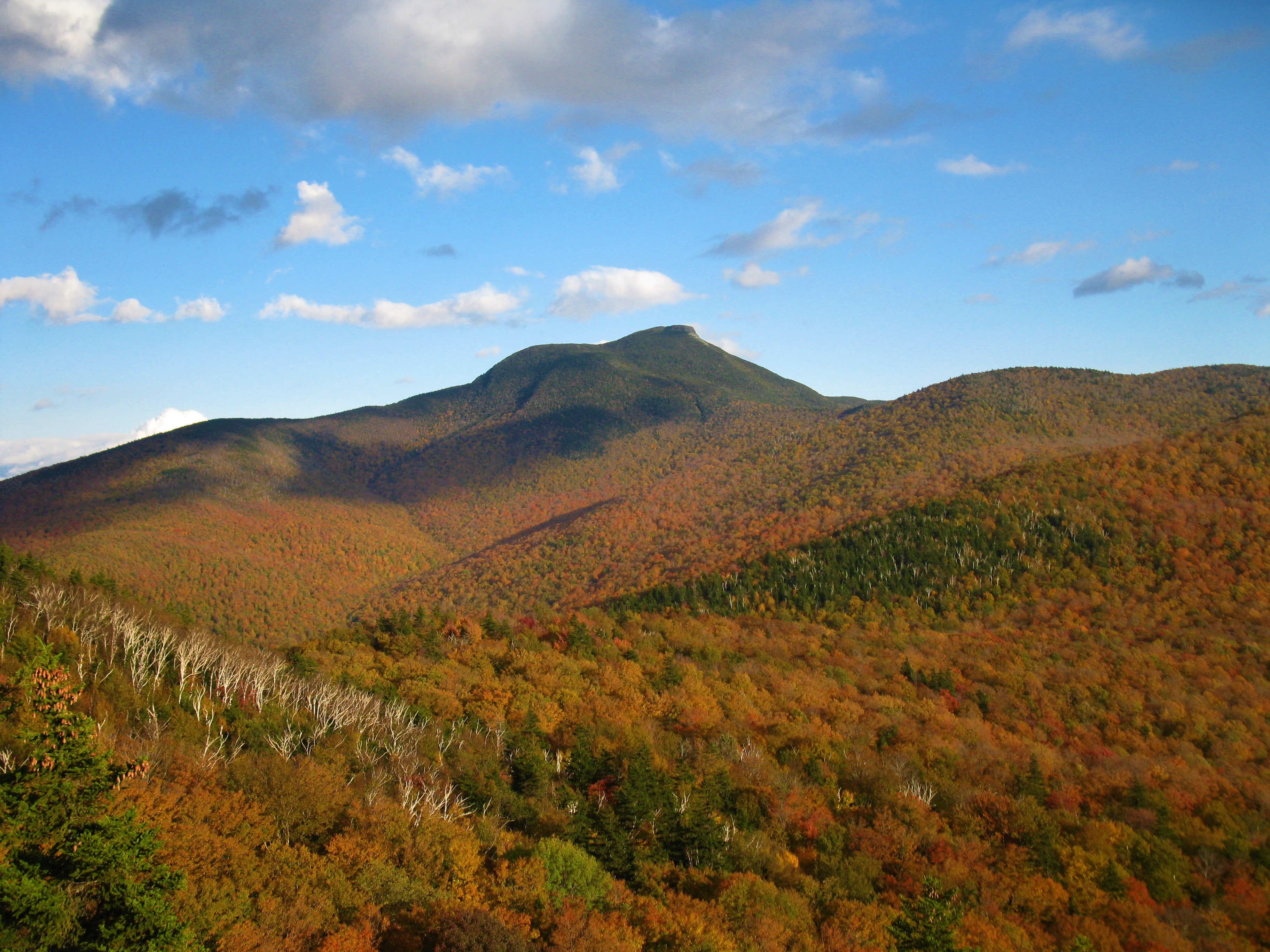
Art took these photos on his bike ride the other day– from our place past Gillette Pond,  to the top of Robin’s Mountain, with great views of Mt. Mansfield and Camel’s Hump.


IMG_4415 (2)IMG_4424 (2)IMG_4422 (2)

Posted in Uncategorized | Leave a comment

Do animals have souls?

IMG_2704

The writer and ecologist Carl Safina has been looking at animals his whole life. I am not talking about sheep – but dolphins and whales, elephants and wolves, crows and razorbills. His beautiful book, Beyond Words: What Animals Think and Feel, contains a wealth of observations of animal life that lend a whole new depth to the question, Why look at animals?

When your dog rolls over for you to rub her belly, or wags her tail and beams at you – is it fair to say that she is happy, or would you be assuming too much? Is it possible that humans are so different from dogs, or cats or lambs or elephants, that we are the only ones who experience happiness, or that other creatures cannot express it in similar ways? Science has collected evidence abundant to demonstrate that animals are individuals – as humans are – that they use tools, that they are aware of the minds of others, that they can use deception and cleverness to out-smart others; that whales, dolphins, wolves and elephants grieve and mourn their dead, help and care for others in distress; they play, laugh, joke, and cry (elephants even produce tears). We are not anthropomorphizing when we apply these words to animals; these emotions and abilities do not belong exclusively to us. “Certainly projecting feelings onto other animals can lead to us misunderstanding their motivations. But denying that they have any motivations guarantees that we’ll misunderstand … Not assuming they have thoughts and feelings was a good start for a new science. Insisting they did not was bad science.”

Jane Goodall was famously scorned for her work with chimpanzees when she enrolled as a doctoral student. She shouldn’t have given the chimps names, her esteemed professors told her, and she shouldn’t have talked about their feelings or personalities. But this insistence on human uniqueness and difference contradicts what we know about biology and evolution – not to mention what is evident to just about anyone who has ever had a dog. Biology tells us that each newer thing in nature is a slight tweak on something older. Everything humans do and possess comes from somewhere – frogs and chickens have femurs, the precursors to our jointed leg. That is to say, that most of what we possess as a species is shared. “Species differ,” Safina writes, “but they are not really very different.”

“We never seem to doubt that an animal acting hungry feels hungry. What reason is there to disbelieve that an elephant who seems happy is happy? We recognize hunger and thirst while animals are eating and drinking, exhaustion when they tire, but deny them joy and happiness as they’re playing with their children and families. The science of animal behavior has long operated with that bias – and that’s unscientific. In science, the simplest interpretation of evidence is often the best. When elephants seem joyous in joyful contexts, joy is the simplest interpretation of the evidence. Their brains are similar to ours, they make the same hormones involved in human emotions –and that’s evidence, too.”

I doubt that there is a reader out there who would question Safina’s reasoning – but in the hallowed halls of animal science, to make these kinds of statements is to commit professional suicide.


Ironically, we began to learn about the social and emotional lives of whales from watching them in captivity. It did not take long for their captors to realize that these creatures were not like sheep or cattle. Babies taken from mother killer whales provoked displays of grief that could break anyone’s heart. “One mother,” describes researcher Alexander Morton, “stayed in the corner of the pool, literally shaking and screaming, screeching, crying.” Another watched as her calf was lifted by crane from the pool and “as her baby’s voice left the water and entered the air, the mother threw her enormous body against the tank walls, again and again, causing the entire stadium to shake.” Another mother who lost her baby was inconsolable, and for hours would face the gift shop, staring at the toy baby orcas.

Anyone who thinks that animals have no consciousness, no language, no ability to plan ahead, no self awareness or consciousness of death, or that they do not have “theory of mind,” meaning that they cannot know that “others have thoughts different than their own,” would be astonished by the observations recorded by researchers who have logged countless hours patiently watching them. All animals, it turns out, are individuals –even the squishy octopi are different, one from the other, just like we are – where one octopus will screw open a jar to retrieve its contents, and then rescrew it, another will show no interest whatsoever in the jar. A razorbill knows every other razorbill by name– out of thousands in a colony –and can find his mate among them, without fail. Groupers are clever, who solicit the cooperation of eels at capturing their prey. Jays plan consciously, storing food and eating the perishable food first. Elephants mourn and remember their dead. Killer whales – orcas – live in social units with their distinct dialects and avoid mixing with other units for cultural reasons. There is no parallel for this, that we know of, outside of humans. Above all, the species that is most like us is not a primate – but the wolf, who lives in family packs, in socially complex groups, who is as loyal as she is brutal. Wolves will banish one another, defend their loved ones to the death, and lead suffering, tragic lives. Males care for their spouses and offspring for life, and bring food home to their families – only humans do this, and no other species is at war with itself, wolf against wolf, the way we are. “Wolves and humans understand each other,” Safina writes. “That’s one reason we invited wolves, instead of chimpanzees, into our lives.” Wolves, dogs, us. “We were made for one another.”


The stories of whales and dolphins are the most extraordinary. Dolphins escorting lost boats through the fog. Accounts of dolphins lifting drowning bodies to the surface are legion – although humans have not reciprocated their kindness, dolphins and whales have shown an extraordinary gentleness and care towards our species. A group of bottlenose dolphins forms a protective ring around a surfer who’s been bitten by a shark. The attendant dolphins who cared for the boy Elian Gonzalez, adrift at sea, nudging him back onto his tube to keep him afloat. The dolphins who suddenly abandon the sardines they are feasting upon to swim six miles to where a woman lies floating, face up, unconscious but alive. In another account, a group of dolphins suddenly acts strangely, abandoning their sportive diving around a boat’s bow to swim in a column along the portside, keeping a solemn distance. It turned out, someone had died in his bunk on board; only after the body had been removed did the dolphins behave normally again, diving and frolicking around the bow. These researchers had watched dolphins for twenty-five years and never saw them behave this way.

These accounts are too many, too detailed, and too consistent to dismiss as mere anecdotes – many of them recorded by hard-nosed scientists with recorders and notepads in hand. Things like dolphin telepathy – what sounds to a rationalist like woo-woo – has compelled a scientist like Safina to reconsider. Whales and dolphins and elephants caring for lost and injured human beings? What on earth is going on here?

On beaches where killer whales hurl themselves onto the sand to drag away thousand pound sea lions, whereupon they will beat them and tear their bodies to shreds – the same whales will, docile as puppies, form a ring around a park ranger who has slipped into the surf in his kayak. Giant predators who will crush and kill any other mammal in the water, have never killed or hurt a human being, not even accidentally. How is it, Safina asks, that they have never – not once– even tipped over a human being in a kayak? Or accidentally smacked one of us with a tail or fin? Whales will seek out our kind, hanging around boats, putting on a show for whale watchers, seeking us out as playmates and companions; they have escorted lost researchers home, guarded humans from sharks and mourned our dead. Something very mysterious is going on here. Is it possible that whales and dolphins detect a kinship with us, that they do not feel they have with flounder or seals – and that it has something to do with our minds, our consciousness, or dare I use the word, our souls?

Elephants, too, have been known to defend and protect us – showing an empathy and kindness that we surely do not deserve. One elephant carried an injured woman to a safe place, covered her in branches for warmth, and sat with her through the night to defend her from hyenas until help arrived. We have heard the stories of elephants carrying people to higher ground during the Boxing Day tsunami. Elephants will stop dead in their tracks to avoid hurting a human in their path – treatment they would not give to a hyena or a warthog. What is it that elephants see in us that they give us this special treatment? Especially us – who are the only species to massacre their entire families, destroy their forests, and cause them to live their lives in terror and trauma?


Not all animals mourn their dead, or experience the profound and inconsolable grief that whales and elephants do. I have seen our sheep step over their dead lambs as if they were nothing to them. And when we take their lambs away, when they are a year old, the ewes that gave birth to them and cared for them so tenderly in their first months do not even notice they are gone. They graze and chew their cud and lounge about as if nothing whatsoever were amiss. I can say this with as much confidence as I can say that they are happy when they show happiness, or that they are bored and pissed when they are pestering Art to move them to new pasture. This may be what Joel Salatin means (of Polyface Farm) when he says that he has no problem with killing and eating animals because “they have no souls.” By this measure, livestock are different than elephants or whales, who are the very embodiment of soul. If our sheep wailed and screamed and shook when their lambs were taken, it would surely not happen on our watch.

But to say that they do not miss their lambs is not to say that they are machines, or that they do not suffer, nor is it to deny that each of them is a who, not an it. (Every time I type a “who” to refer to an animal, grammar-check advises me to change it to a “that”.) It is our responsibility as their guardians to provide them a good life, and that means, to allow them to live a sheep’s life– to borrow from Salatin again – that is, a life in which they are allowed to express their sheepness. That is their ewetopia.

We are all too familiar with images of nature tooth and claw. But what of nature heart and soul? What about the myriad displays of intelligence, joyfulness, empathy, caring, kindness, loyalty, even soulfulness, that is there for us to see in the animal world if we would only bother to look? How is it that, having lived with animals since time immemorial, we have missed all of this wonder and astonishment? Our science-based understanding of animals is coming around to what the aboriginals always knew, who certainly never doubted that animals had “theory of mind.” To accept that all animals have inner lives that are a mystery to us– sheep and cattle, too –is to admit the sacred into our daily lives. The world, it turns out, is a much more interesting and mysterious place than the one mapped out by Descartes and his descendants– alive with consciousness and empathy, language and music, and webs of communication across the species barrier that we have barely glimpsed. We need not be so lonely as a species. Surely we could not be as cruel – if only we would pay attention to what is hidden in plain sight.


Posted in animal consciousness, Carl Safina, empathy, sheepness, Uncategorized, whales and dolphins, wolves | Tagged , | 1 Comment

Looking at Lambs

IMG_4205 (3)

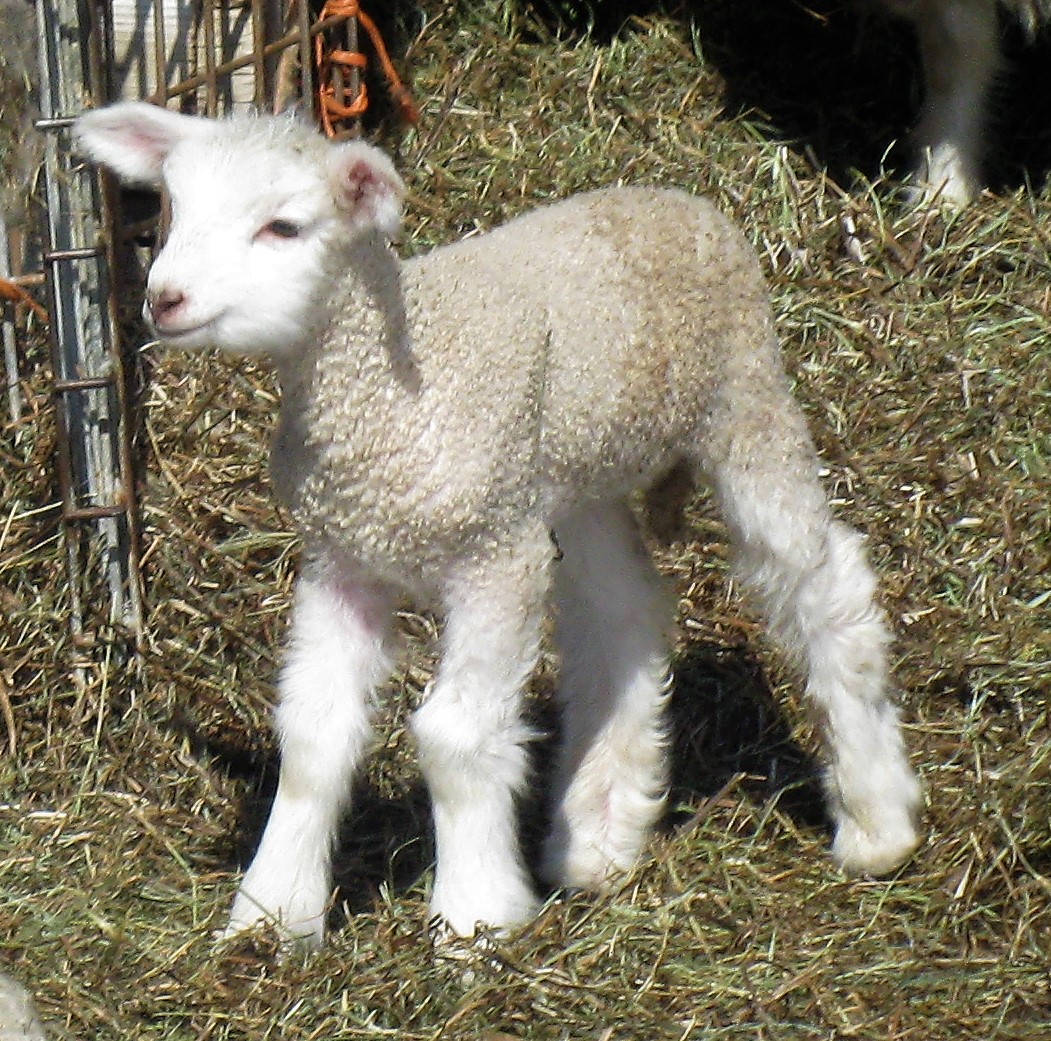
Lambs in spring.

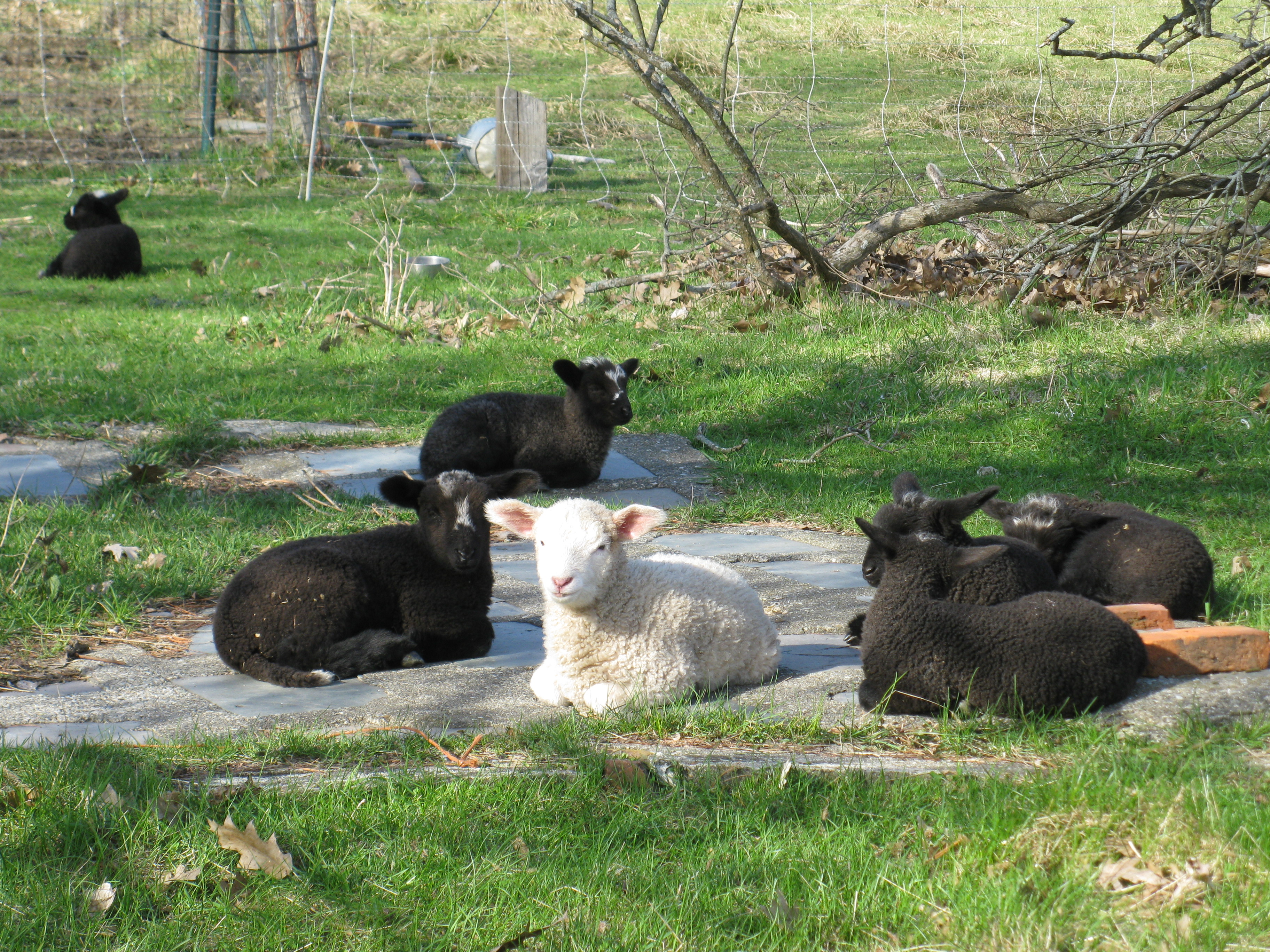
Of course, that is when they are supposed to arrive. Not in dead of winter.  To postpone the lambing season – which would naturally begin five months after the first cold nights—until the milder weather arrives, requires making sure all the ram lambs are neutered, and either separating the ram from the flock or not keeping a ram at all. Last year we had no lambs, and we had no ram, and in the fall we borrowed a ram (who was not easy to find) for two months, returning him after he had performed his “service.” He was a gentle giant with a roman nose and a bell hanging from his neck, which meant we always knew when he was near. His name was Obama. I was not sure how I felt about that name—though soon enough the name belonged to him. Obama did have a fringe of grey frost to his dark wool, and he had that certain presidential coolness about him. After the tragic events of November 8, I felt a pain something akin to grief whenever we spoke his name.

….

In his classic essay, “Why Look at Animals?” John Berger reflects on the disappearance of animals from our lives, who have been with us as partners in survival throughout our history. In Vermont, there are almost no cows or goats or sheep grazing on open pastures anymore, though that iconic image still persists in our minds as if it were still true. There are two large dairies in our town, though no cows anywhere in sight. On one farm, the cows sleep on waterbeds and are milked by robots. On the other, it is possible to catch a glimpse of their big-boned bodies through the barn door, and to see the calf hutches lined up behind it, though not the poor animals that must live their short lives in them. The animals are still here but we do not see them, and they can not return our gaze to look at us.

Excerpted from Lambs in Winter: Sketches of a Vermont Life through Seasons of Change (UMass Press 2025)

­­­­­­­­­­­________________________


Why Look at Animals? John Berger. Penguin, 2009.

Posted in Uncategorized | Leave a comment

Going Gently

Ewelysses (right) with her lamb Eweclid.

We buried our favorite ewe yesterday.

Ten years old, Ewelysses died the way the old ewes always do: she just lay down one day and never got up again. It was in the middle of lambing season, and during her last days, the new lambs were coming into the world, playing and crying and sometimes jumping onto her back. Such is the nature of farming: so much life, so much death.

…..

I remember it all so well because this was the winter I was traveling back and forth to Washington DC to help care for my brother in hospice. These were the two lambs who appear in my poem “Coming Home”:


Coming Home

When I got home from the airport

….

The first thing I’d do

would be to go out to the barn

to feed the two lambs, where I’d let

my body sink down to the ground,

my back against the wall,

as the lambs ––one black, one white –

climbed all over me, until they found

their bottles, which they’d suck

with a great ferocity, until

they were satiated, and calm,

the one resting across my lap,

sleeping, murmuring.

There I would sit for a while

in the dark, listening to the slow

heavy breath of the ewes,

the ground soaked, through the years,

with the blood of afterbirth, and where,

when the old ewes die, they just

lie down in the straw and never

get up again, wanting to remain

with the animals, as the old poet said.

And now that I come to mark the tenth anniversary of by brother’s death, I measure it in the length of a ewe’s life, and it feels too long, too much, to have passed so quickly…

Continue reading in Lambs in Winter: Sketches of a Vermont Life through Seasons of Change (University of Massachusetts Press 2025).

sc000248de

Niles Lathem , June 21, 1955 – April 12, 2007.

In memory of my brother Niles, June 21, 1955 – April 12, 2007.

Posted in grief, Uncategorized | 2 Comments