The Monitor Elm

l

img_1899

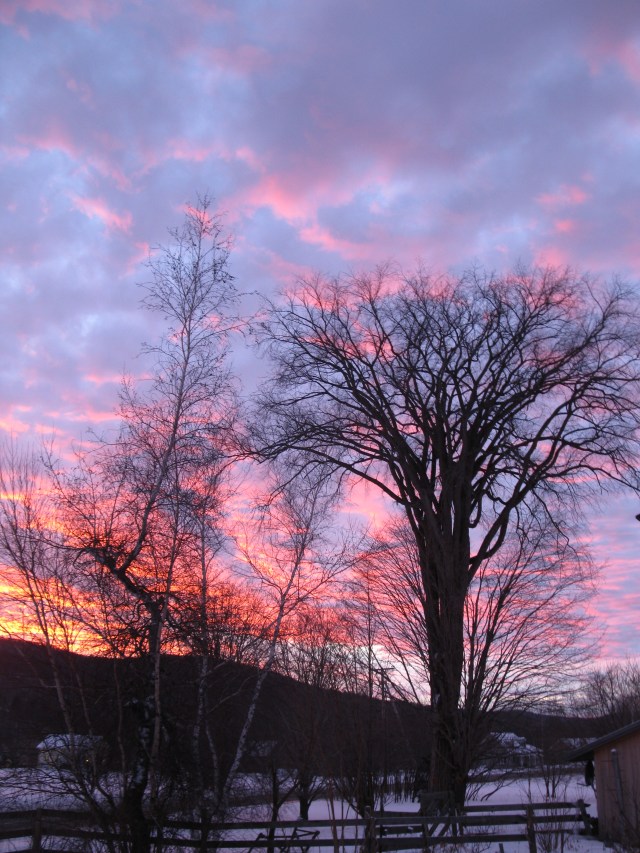
We have some great old trees on our property, but the tall one-hundred-year-old elm tree is the grandest of them all.

It rises straight up from the roadside and then opens up like a fountain in the sky.

I have many fond memories of gathering with friends around a picnic table in the shade of its great canopy. Our sheep like to take their siesta in its ample shade, and in summer its crown is filled with songbirds. We have even seen the pendant nest of the Baltimore oriole suspended from its uppermost branches.

It is odd that friends who have been to our place many times are surprised to learn that there is an elm tree here. That may be because its telltale tall straight trunk is disguised by the maple that grows with it like a conjoined twin.

A few years ago a botanist from the University of Vermont stopped by to study the tree; he told us it might be the healthiest American elm tree in the state. More recently, someone with the Nature Conservancy knocked on our door – he was passing by when he happened to notice our elm. The Nature Conservancy is searching the region for the largest and healthiest surviving elm trees for its floodplain forest restoration project, with the goal of planting seven thousand disease-resistant saplings over three years in Connecticut River Watershed. *

Only last year another large old elm tree in Richmond succumbed to the disease that has taken 77 million elms since the 1970s. The tree was removed by Vermont Tree Goods, which makes unique handcrafted furniture out of very old trees. The Tilden Street elm was made into a conference table that now dignifies our town offices, and can be admired and used by the people of Richmond for generations to come.

Before I learned about the Tilden Elm, I had been rather complacent about our own, believing that if it has survived this long then it is not in danger.

Then I learned about the death of another elm, this one the largest elm tree in Vermont – called the Vermont Elm – last November in Charlotte. Vermont Tree Goods took down the tree, milled and kiln dried the wood and turned it into furniture. The bottom 20-foot long section alone weighed 25,000 pounds.

The elm tree once dominated the floodplain forests in New England and was planted along city streets to form living arches, in city parks and town centers. They are fast-growing, robust trees that can tolerate urban environments and all kinds of storms. And they are beautiful.

We did love the elm tree to death, however. Planting rows of elms along city streets was, in effect, to create monocultures that made them susceptible to epidemic disease. When dutch elm disease arrived, it swept through these plantations, spreading from treetop to treetop, and then, infected elms in their natural habitats as well. Trees that remained isolated from affected trees, and those with genetic resistance, survived. Our elm is one of those.

American elms are still abundant in floodplain forests but they do not survive to maturity. No other tree has come to take the ecological place of the largest, longest- living tree in the floodplain forest. Elms with their deep strong roots kept soils from washing away and maintained water quality of rivers and streams, while providing habitat for osprey, eagle, barred owl, songbirds, bats, and flying squirrels.

Trees have a trenchant psychological power over us that may be difficult to explain. But it makes sense, given the importance of trees to our survival, and given our origins as tree dwelling primates. In his beautiful essay, “The Brown Wasps,” Loren Eiseley writes that he passed his life in the shade of a non-existent tree – a tree that took root and flourished in his memory as it failed to do in the patch of soil where he planted it, with his father, as a young boy. The house and the street where he lived had both rotted away, but not the memory of the tree, which, he learned many years later, had perished in its first season, just after his family moved away. “It was part of my orientation in the universe,” he wrote, “and I could not survive without it.”

I know what it is like to lose a big old tree. Before I moved to Richmond, I lived beside the New Haven River in an old house surrounded by large trees that were badly damaged in a late summer thunderstorm. One tall black locust tree lay sprawling across the road, others lost their tops. A neighbor broke a leg when a tree fell on him during that storm, which whipped around and twisted like a cyclone. For a long time I mourned the loss of those trees, and I felt that sense of disorientation– the kind that comes with grief, when we stumble about on our sea legs, stunned and unanchored in a world we dimly recognize.

It was a bit like that for us when the twin towers fell – we lost our physical orientation in the city, and in some ways, our orientation in the world as well.

Our farm is exposed to the most violent winds that are funnelled through the river valley, picking up strength as they barrel across open farmland. In the aftermath we find tree limbs and branches wrenched from their bodies, or whole trees felled and uprooted. In her poem, “Tornado at Talladega,” Gwendolyn Brooks describes the wreckage after a storm:

Certain trees

Stick across the road.

They are unimportant now.

They cannot sass anymore.

Not a one of these, the bewildered,

Can announce anymore “How fine I am!”

Here, roots, ire, origins exposed,

Across this twig-strewn, leaf-strewn road they lie,

Mute, ashamed, and through.

Though there is some danger, or sentimentality, in personifying trees, it is hard not to, as a tree’s life cycle so uncanningly parallels our own. Gachelon Bachelard writes, “the suffering tree is the epitome of pain.” But storm-ravaged trees recover, limbs grow back, a hole in a forest canopy lets in light for the growth of young saplings, and the rotted wood from downed trees is host to whole galaxies of life. This may be where the mimesis between the human and arboreal life cycle begins and ends.

Another favorite poem, “B.C.” by William Stafford, imagines the millennial history to which a single sequoia has borne witness. (“Great sunflowers were lording the air that day; this was before Jesus, before Rome…”) I like to think about the history our elm has observed from its transcendent position in the sky—the disappearance, and recovery, of the forests; the meadows dotted with sheep, then cows, and now, a pox of subdivisions and their cul de sacs. This old farm. The raising of the seven-story-tall monitor barn, its slow decay, and its resurgence, lazarus-like, from its ruins.

Our elm tree does not have a name, but perhaps it deserves one. I would suggest: the Monitor Elm.

Our box alders have been split and wrenched and mutilated so many times they are by now shapeless malformed trees, with all their amputations and perversions. The birches do what they are supposed to do – they bend over backwards and never get up again. But the elm – the elm lords over all of this mortality and remains unscathed, with its canopy high in the stratosphere.

As the climate becomes more and more deranged, there will be more storms and more lost limbs. The elm – if it remains untouched by dutch elm disease – with its immense trunk and tenacious roots, may be poised to weather the storms to come. We will need these giants in our floodplains to hold back the waters of the deluge, and the forests to hold the world together through its pain.

[In memory of Larry Hamilton (1925-2016), whom I first knew as “the tree guy” in Charlotte, lifelong conservationist and peace activist.]

Notes:

* The cultivation of hybrids should not be confused with genetic engineering. To learn about the dangers of genetically engineered trees go to the Global Justice Ecology Project website (globaljusticeecology.org).

Nature Conservancy Connecticut River American Elm Restoration Project: https://www.nature.org/en-us/about-us/where-we-work/united-states/vermont/stories-in-vermont/largest-elm-tree-restoration-in-the-northeast/
Posted in elm tree, Nature Conservancy | Leave a comment

Dried Flowers for Thanksgiving

img_3511img_3510

Posted in dried flowers, Uncategorized | Tagged | Leave a comment

New colors and worsted weight yarns

img_3517IMG_2964

Posted in Uncategorized | Leave a comment

More Lambs in Winter

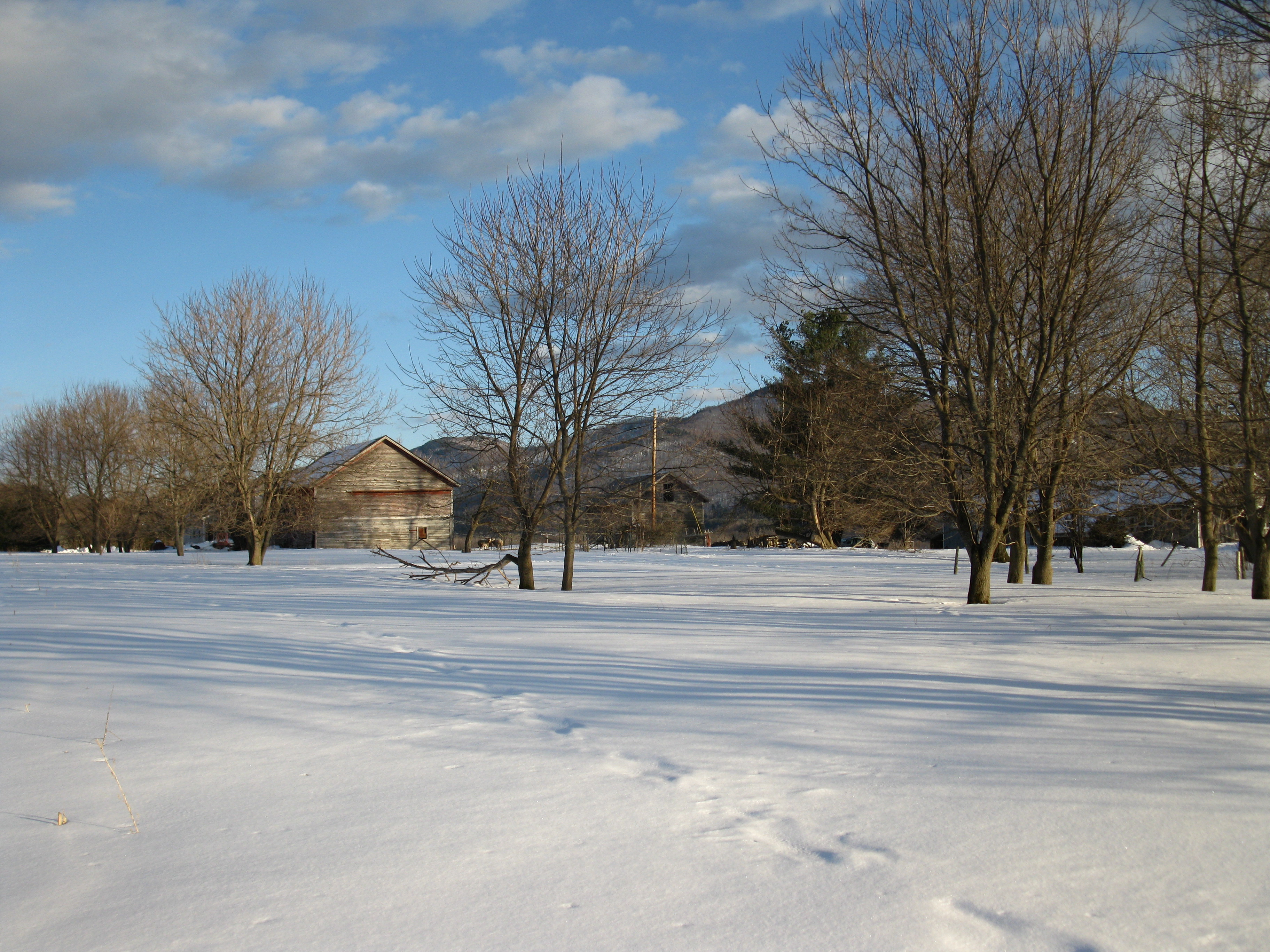
The barn where the sheep live in winter.
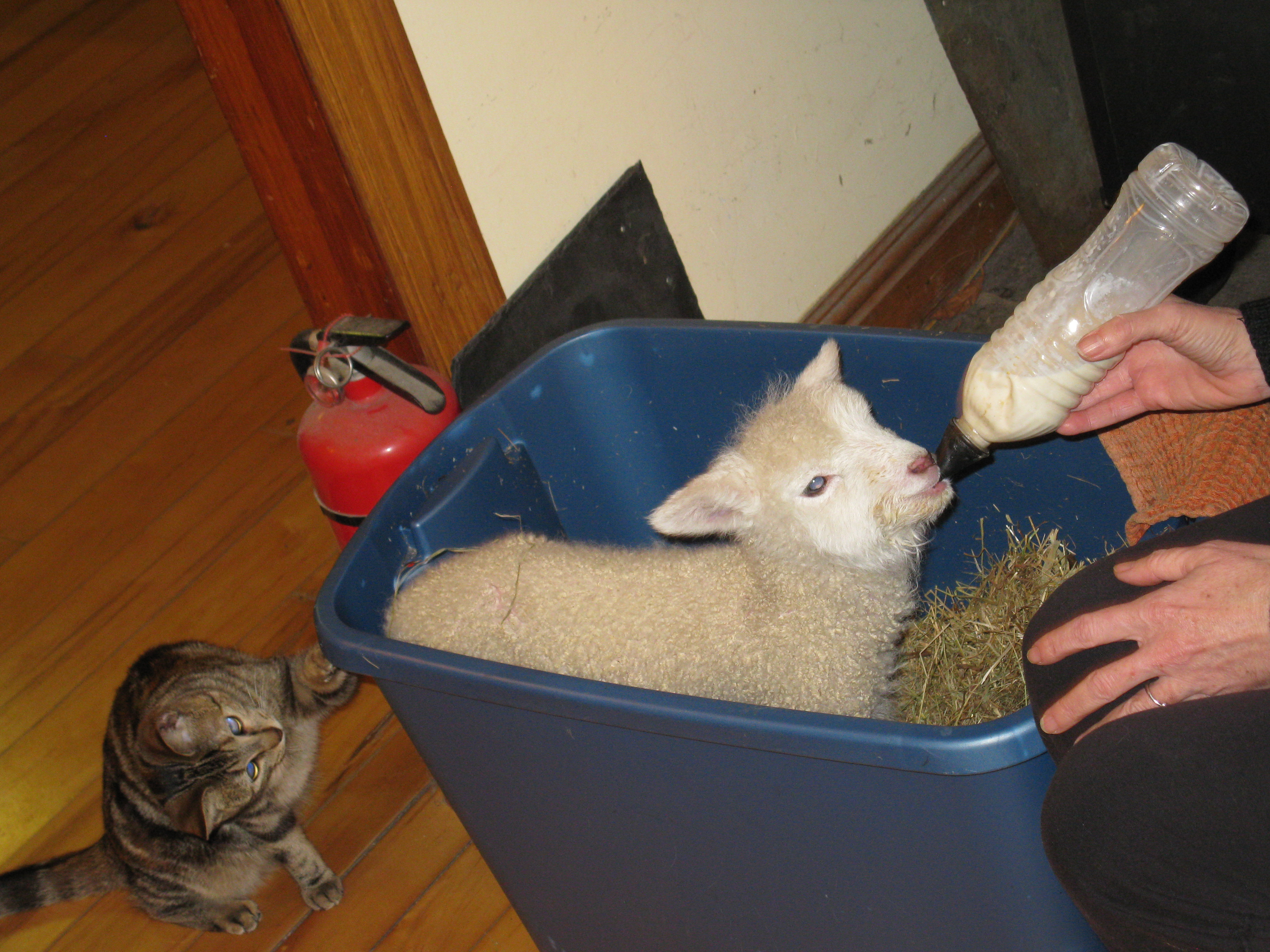
Ewela in her box.
Ewela in her box.
IMG_2608
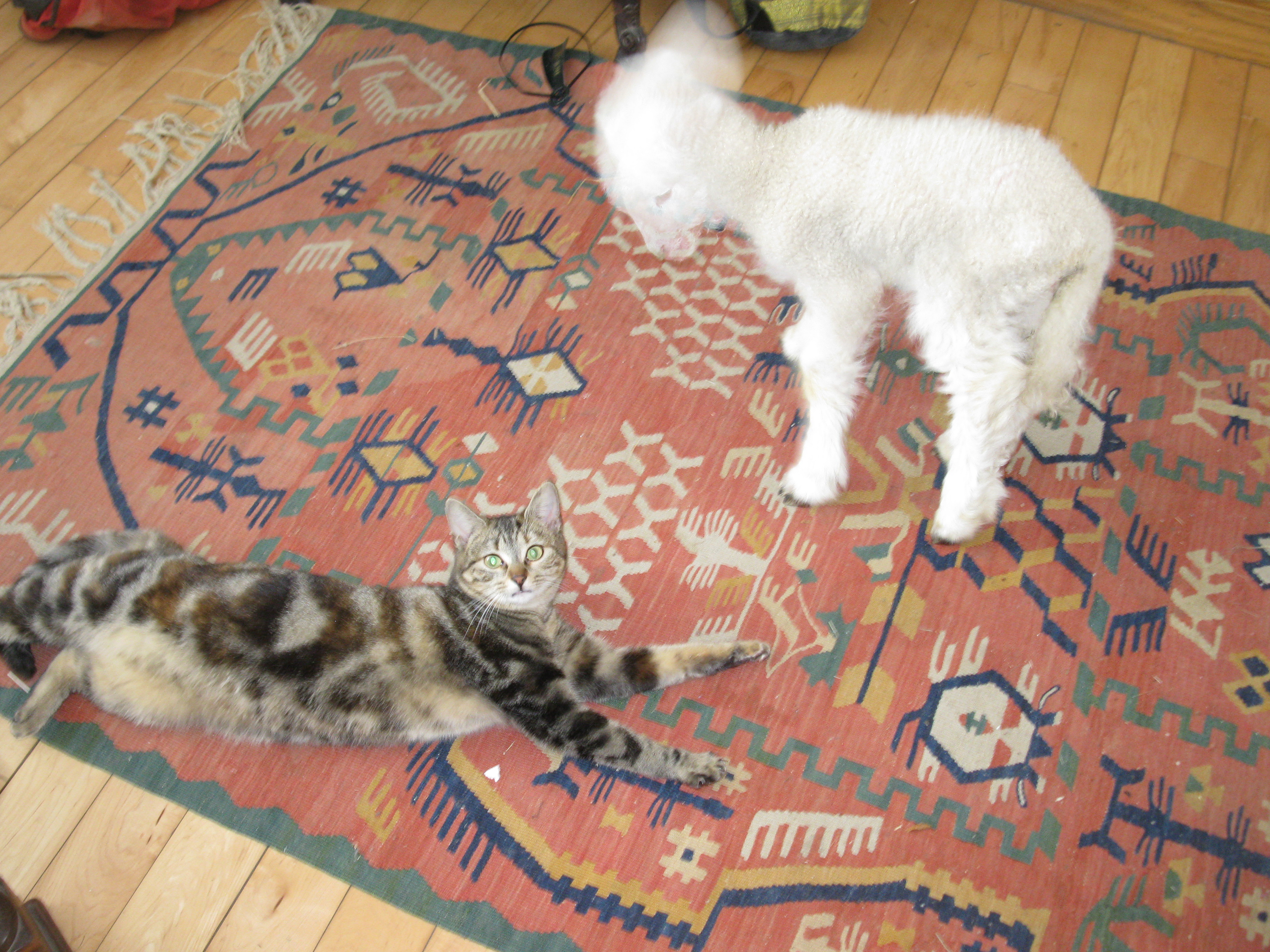
Our new kittens had a new playmate.

Last year we vowed we would not do this again. No more lambs in dead of winter. Lambing season is traditionally in spring, mostly because it is easier on the farmers. Rams are kept apart from ewes to delay rutting; some farmers don’t keep a ram at all but borrow one once a year for “service,” to use the ewephemism of the trade.* Last winter we gave away our ram and neutered all the ram lambs. Or so we thought.

The first lambs arrived on February 5: twin white ewe lambs. When I discovered them, one ewe, Ewelysses, was cleaning them and acting like they were her own, but it was another ewe who had the telltale afterbirth hanging down between her hindlegs. Ewelysses showed no sign whatsoever of having just delivered. Meanwhile, the other ewe, Eweripedes, stood back and stared at them in wide-eyed disbelief. I recalled that Ewelysses had done this before – an over- eager mother appropriating another ewe’s lamb – but that time she quickly went into labor and thus had a lamb of her own to care for. Ewelysses could clean up those lambs, and call- and- respond in loving devotion, but she had no milk to feed them. Somehow I would have to separate her from those lambs so that their true mom could nurse them, and soon. **

Continue reading in Lambs in Winter: Sketches of a Vermont Life through Seasons of Change (University of Massachusetts Press 2025).


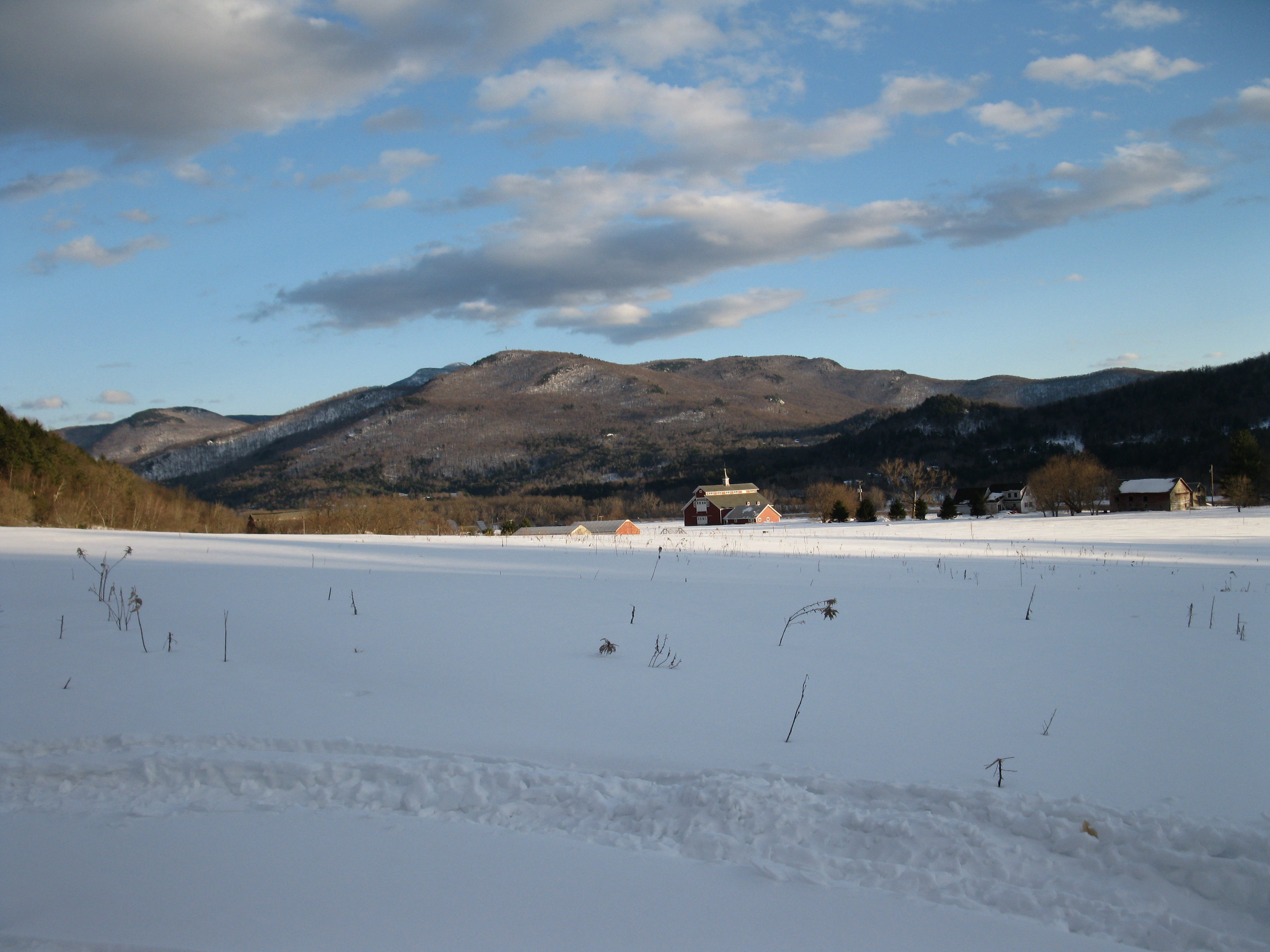
The world is still a snow bowl. View of Ewetopia Farm and the West Monitor Barn.

*Sorry, but I couldn’t resist that.

** I am grateful to our friend John Dodson who came to our aid at that moment (when Art was not around).

Posted in Bottle lambs, lambing, sheep, Uncategorized, Vermont wool | Tagged , , , , , , , , | 3 Comments

The Farm at VYCC

Zuti (left) and Rosie

Zuti (left) and Rosie

 The Farm at the Vermont Youth Conservation Corps

Fartun (left) and Sumeya

Fartun (left) and Sumeya

Sumista and Kamala

Susmita and Kamala

Bishnu and Musa

Bishnu and Musa

I waited with Nicole beside the greenhouse for the afternoon crew to arrive from Winooski. We had already selected the flats of red onion seedlings, dunked them in fish emulsion, and laid them out for the kids who would plant them in the fields. Nicole was a bit fidgety. Looking over towards the back of the Monitor Barn for the crew’s arrival, she said, “I hate waiting.”

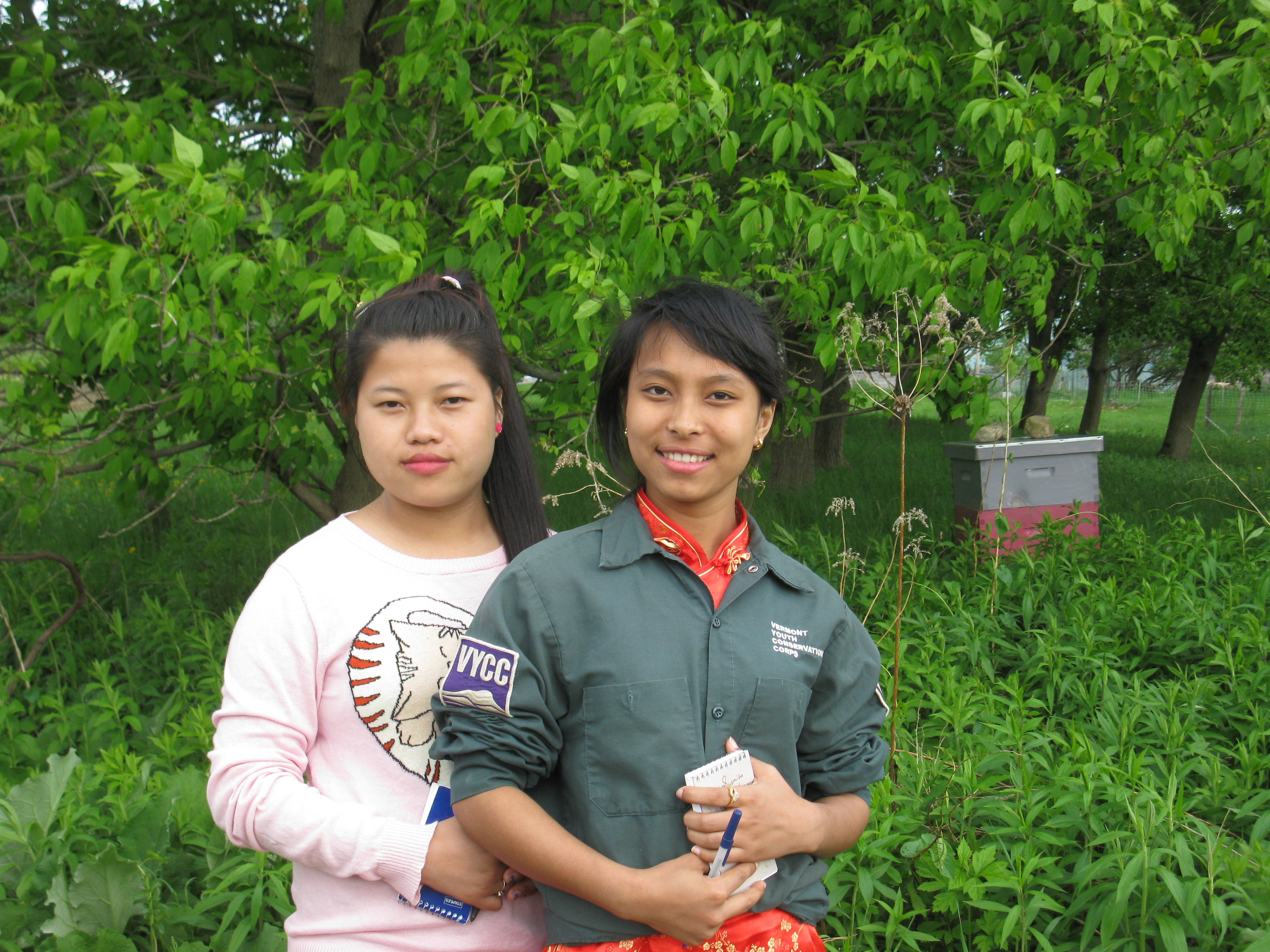
In spring, every weekday afternoon for six weeks, a group of English Language Learners from the Winooski High School comes to work for a few hours at the VYCC farm. They are new immigrants from Africa, Southeast Asia, the Himalayas, and the Middle East. From our house, which abuts the farm, I can see them walking along the edge of the gardens with their green VYCC shirts over their clothes. The girls are often dressed in colorful, flowing headscarves; some are dressed in long skirts. Their presence on the landscape has become as sure a sign of spring as the arrival of robins and red winged blackbirds after a long Vermont winter.

“Ah!” she says finally (after we have waited for a long three minutes). “They’re here!” We watch the group appear over a rise with the magnificent barn behind them. The students form a circle around Nicole who gives them their instructions for the afternoon. “Today is a perfect day,” she says. “The volunteers who were here today did an amazing job planting onions. I know you can work even faster than they did.”

One of the reasons I like to participate in the farm work at VYCC when I can is because I get to hang around some pretty amazing people. Nicole Mitchell – who studied anthropology and Chinese in college – is beginning her second summer in her food security VISTA position as a farm apprentice. Lucky for Nicole, who hates waiting, she doesn’t often have time on her hands with nothing to do, because the farm apprentices are up at daybreak and generally work until nightfall, six or seven days a week; they not only have to dig, weed, and plant, but also have to manage teams of fifteen-year-olds, lead them in reading and discussion sessions over lunch, teach cooking classes, and coordinate sometimes large groups of volunteers, who often can’t distinguish a potato plant from a parsnip.

We follow Nicole, letting the onion flats hang down by our sides as we walk toward the rows prepared for the onion seedlings. Jeremy Schleining, who was the 2013 summer farm crew leader, and Nicole demonstrate their method of poking holes in the plastic weed barrier using a spacer. The plants are then gently pulled from the flats, dropped four to a row onto the plastic, and then planted. Crouched down over the ground, we loosen the clumps of clay soil and press the young onions into the earth.

Jeremy and Khada, who are working beside me as we plant, are deep in conversation – something about religion and Robert Frost. A high school junior, Khada is one of Vermont’s many new immigrants of Nepali descent who were forced to leave Bhutan, and then were not welcomed when they tried to rebuild their lives in Nepal. I remember how Khada, who worked on the farm crew last summer, was shy and insecure about his English. Now he talks excitedly, leaping from one topic to the next as we move down the row.


When I moved here in 2007, we were surrounded by nothing by industrial corn. Little by little the VYCC developed its farm program, reclaiming the land from the abuses of industrial agriculture. At first, they did not know they would become deeply involved in tackling food insecurity in a state known for its vibrant agriculture, or in the movement for sustainable farming. Last summer, only a few years since they planted their first gardens, the farm at VYCC cultivated eight acres of vegetables and distributed 53,000 pounds of fresh produce to food insecure Vermonters. The program continues to grow by creating new partnerships and opportunities to connect youth with the land, while finding creative ways to build a more inclusive local food movement. New in 2014 will be programs for gap year students (who are between high school and college), who will live in yurts and work alongside the farm apprentices, ELL students, and at-risk youth crews.

When we have planted nearly three quarters of the row, about the length of a long city block, Nicole thanks the group for their hard work and tells them they can take a break before their bus arrives to take them home. “You don’t have to stay,” she said, “but I’d really appreciate it if some of you volunteered to help me to finish this row.” Most of them – and all the boys – vanish before I can even turn around, but three of the girls have volunteered to stay–Fartun, who is from Kenya, and Rosie and Zuti, from Thailand.

It has been a long time since I have tried to maintain that crouched position for so long, and my body is screaming, but I also stay. It is my chance to visit with some of the girls whom I met one day last summer. Rosie, wearing a bright blue headscarf, jeans, and silver cowboy boots, remembers me from that day. We had lunch together in the Hay Mow, when she explained to me so patiently why she and her friends were not fasting although it was Ramadan.

I recall how Zuti, who is originally from Burma, told me that she came here with her large family from a refugee camp in Thailand where they lived for eleven years. She wears a long plaid skirt and a red headscarf that frames a refined, melancholy face and falls down over her shoulders. She loves to farm, she told me on that midsummer day. “I plant all this,” she said, gesturing with a sweeping motion over the rows and rows of squashes, tomatoes, peppers, onions, potatoes, and leeks. She is surprised that I remember her. But how could I forget?

The five of us work quickly and finish the row. “I am so happy that I don’t have to stay until dark finishing this row all by myself,” Nicole says. “Now you better run to catch your bus!”

The three girls run off and Nicole and I walk back down the row, where we come to the property line that divides our place from the VYCC. I am already home. Over the following week, I will pass by and admire the long rows of tender onion seedlings, forming ribbons of green across a growing tapestry of row covers and spring plantings.

In 2014, the farm will produce even more food than in 2013, to feed yet more hungry families. Aside from all the awesome food, I know that by far the most important product of the farm is the transformation in the lives of all the youth who pass through here. As I leave Nicole and head home, I can’t help but feel that a little of that magic has rubbed off on me, too.

[The Farm at VYCC always welcomes volunteers, and relies on individual donations. Contact them at farmatvycc.org]

[See my article on the VYCC healthcare shares program, “The Vermont Paradox: Youth Program Takes on Hunger and Chronic Disease in a Locavore State” at http://civileats.com/2014/09/11/the-vermont-paradox-youth-program-takes-on-hunger-and-chronic-disease-in-a-locavore-state/%5D

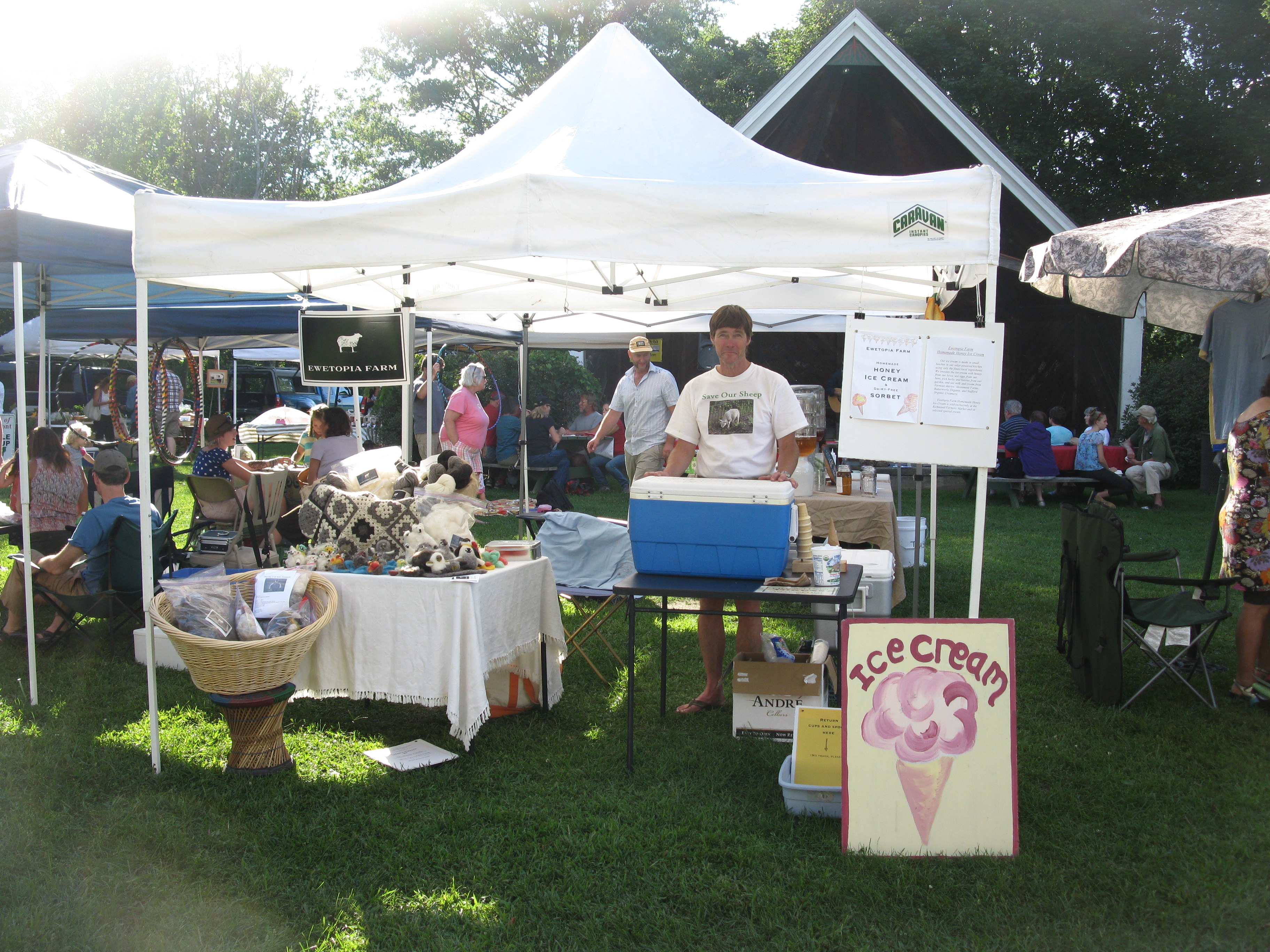
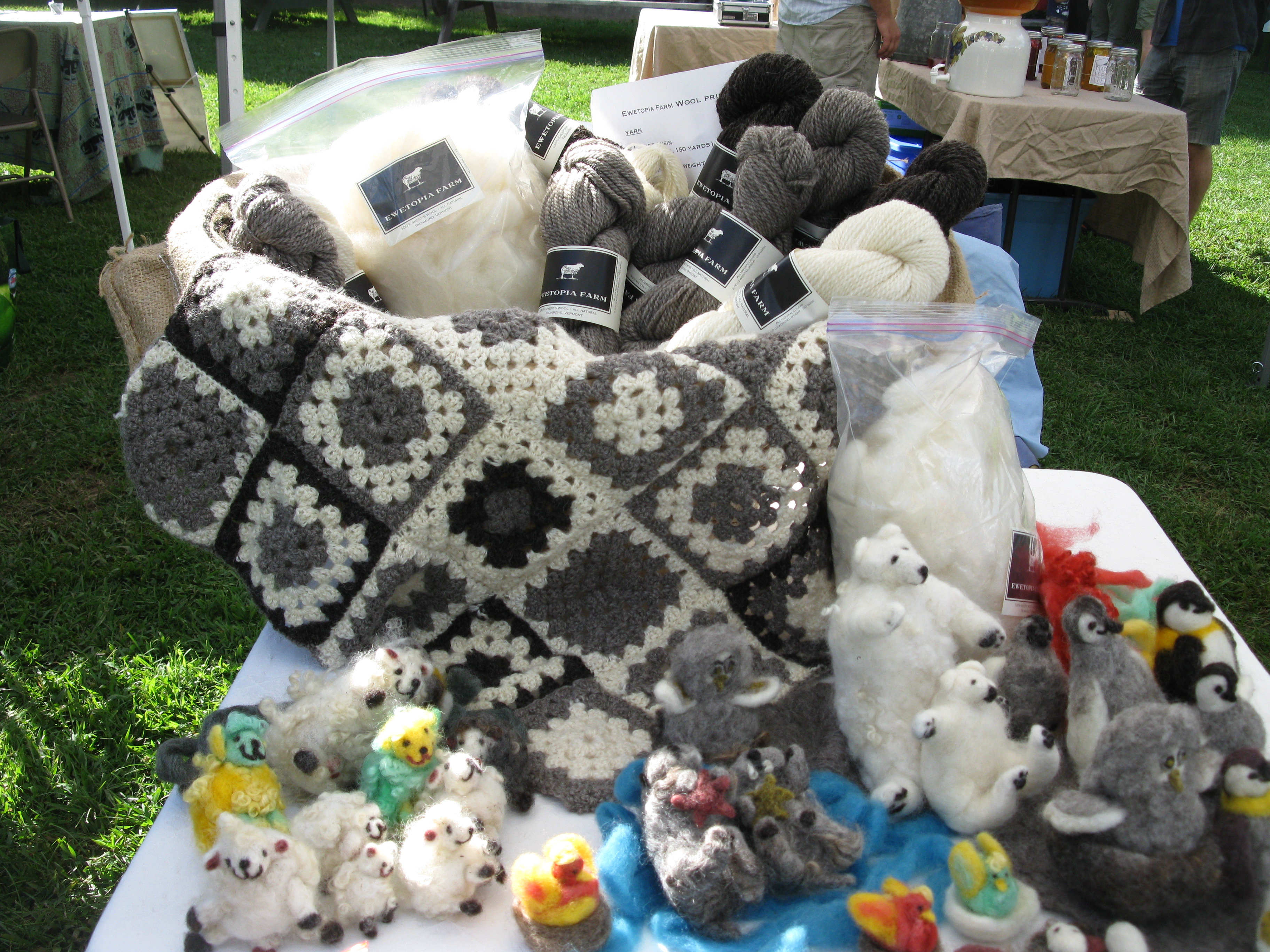
Richmond Farmers’ Market opens this Friday, May 30.  We will be there every other week (May 30, June 13,  27, July 4, 18, August 1,  15,  29, September 12, 26, October 10, 17) with our homemade honey ice cream and sorbet, and later in the season with our wool–yarn, rovings, and felted crafts. Stop by and see us!

Posted in food insecurity, immigrants, Vermont wool, VYCC | 2 Comments

Winter in Ewetopia

IMG_1891IMG_1887IMG_1871IMG_1897

Posted in Uncategorized | Tagged , , , , , , , , , , , | Leave a comment

Lambs in Winter

IMG_0058

It was a freezing cold morning in early January when Art woke me with the news.

“We have a lamb,” he said.

“Oh, no.”

We were afraid of this – we expected the lambs to arrive early this year, but we hoped we’d sneak through this cold spell before they did.

It was ten degrees below zero. I could see them from the kitchen window – the

all-white ewe standing apart from the others with her all-black lamb standing beside her.

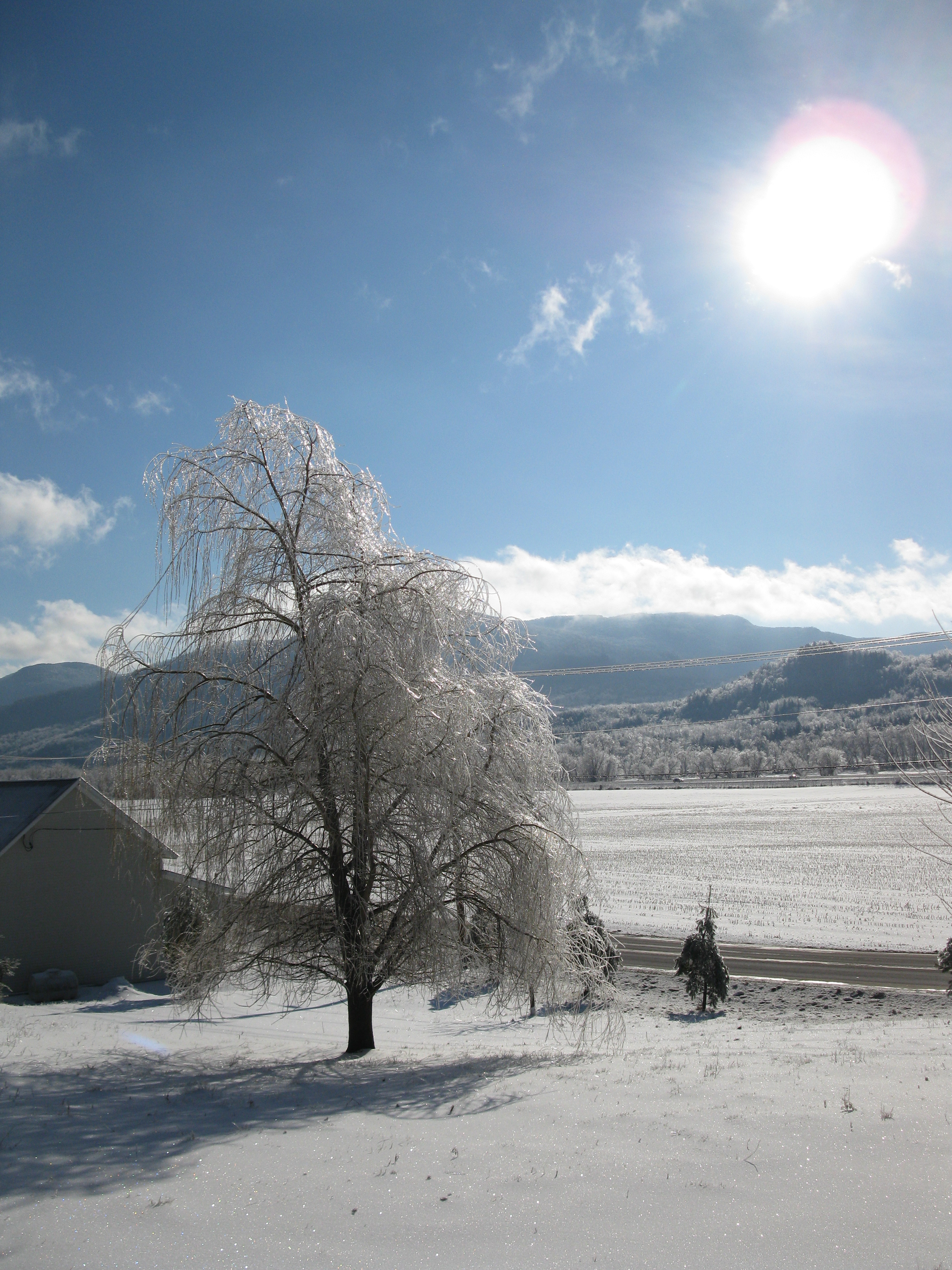
The world outside was covered in ice.

I went out to find the ewe was ignoring her lamb. Art had just given them their day’s ration of hay­– it is always mayhem when the sheep are fed in the morning– they move from hay pile to hay pile, as if someone else’s pile might be preferable to one’s own, when all of it comes from the same hay bale. (It was sheep who invented the idiom, “The grass is always greener…”) The poor little lambs try to keep up with their moms but are soon confused. The big kids get annoyed with them and bump them around, while their moms are busy taste-testing and doing their little dance.

I picked up the lamb and put my finger in its mouth – cold. She was getting that hunched look—also not a good sign. A lamb needs to nurse to maintain its body heat; if it feels cold, that’s a sure sign it’s not nursing. I tucked her under my arm and carried her over the paddock fence and across the ice to the house as she wailed. A lamb’s cry is loud enough to be heard from a mile away, and has evolved to be heart breaking. After a minute or two in front of the woodstove she quieted down and went to sleep.

I let her warm up and then brought her back out to the barn. Art and I tried to get the ewe and her lamb into the lambing pen. A ewe will hear her lamb crying from inside the pen and will usually follow. But this ewe just stood there, half in, half out.

“She needs hay,” I said.

Then a different ewe, Ewelysses, barged into the pen and sniffed the lamb like it were her own. She went out again, then came back, responding to the lamb’s cry as only a mother ewe should.

“Wait! That’s not her lamb!” Ewelysses was taking a greater interest in the lamb than the lamb’s own mother. Ewelysses moved around restlessly. Then she lay down in a far corner of the barn, leaning against the wall.

“She’s going into labor,” I said. Otherwise, she would not be lying down at mealtime, uninterested in her breakfast.

She got up and ambled into the lambing pen.

She started breathing heavily. She curled her upper lip, making an equine grimace, lifting up her chin. She squirmed and shifted her weight from side to side. She got up, turned in a circle, then lay down again. She began to push, groaning slightly.

I had seen ewes give birth before, and it usually seemed so easy. This time it seemed painful. I looked at Ewelysses’ backside – and saw the lamb’s head and a forepaw emerge.

The ewe continued to strain.

“I need to see the other foot.” I walked around to get a better look. Then Ewelysses stood up. She swung around. The lamb was half emerged now, hanging down between the ewe’s hindlegs, sheathed in an ochre-colored mucus. I could see both forelegs and the head. Ewelysses circled around and around, the lamb swinging from her as in a game of airplane. It was odd—as if the ewe were trying to shake the fetus loose. The lamb’s head knocked against the wall. Then it slipped free, landing on the floor like a slimy fish on dry ground.

Ewelysses immediately went to work licking the lamb clean. The lamb’s head perked up, its eyes opened, and it gave a little cry.

It was very convenient that Ewelysses gave birth right there in the lambing pen.

The only problem was, we needed the pen for the other lamb and her mom. That lamb was still not nursing. She wandered around – all black with splashes of white on her face like spilled milk—a little lost lamb. I saw her wander outside and curl up on the ice to take a nap.

It was a forlorn sight. I picked her up and brought her back inside the house. As I took off my boots, the lamb stumbled – her hooves sliding across the wood floor – into the closet by the front door, where she settled down. She looked up at me and cocked her head, her ears flopped over like a puppy’s ears.

“Not there,” I said, and put her next to the stove.

Meanwhile, Art needed to build a second lambing pen. He went into town to get pallets and eyelets, and quickly constructed a solid new pen. He needed to drag the ewe on her back into the new pen, then righted her onto her side. I put the lamb onto the ewe’s nipple, and she drank. She drank and drank and drank.

Ewelysses, meanwhile, continued to lick clean her lamb. I watched as the yellowish bundle of wool and bones tried to stand up – first straightening out his hindlegs, then pitching forward as he unfolded his forelegs and swiveled around, before collapsing back into the straw.

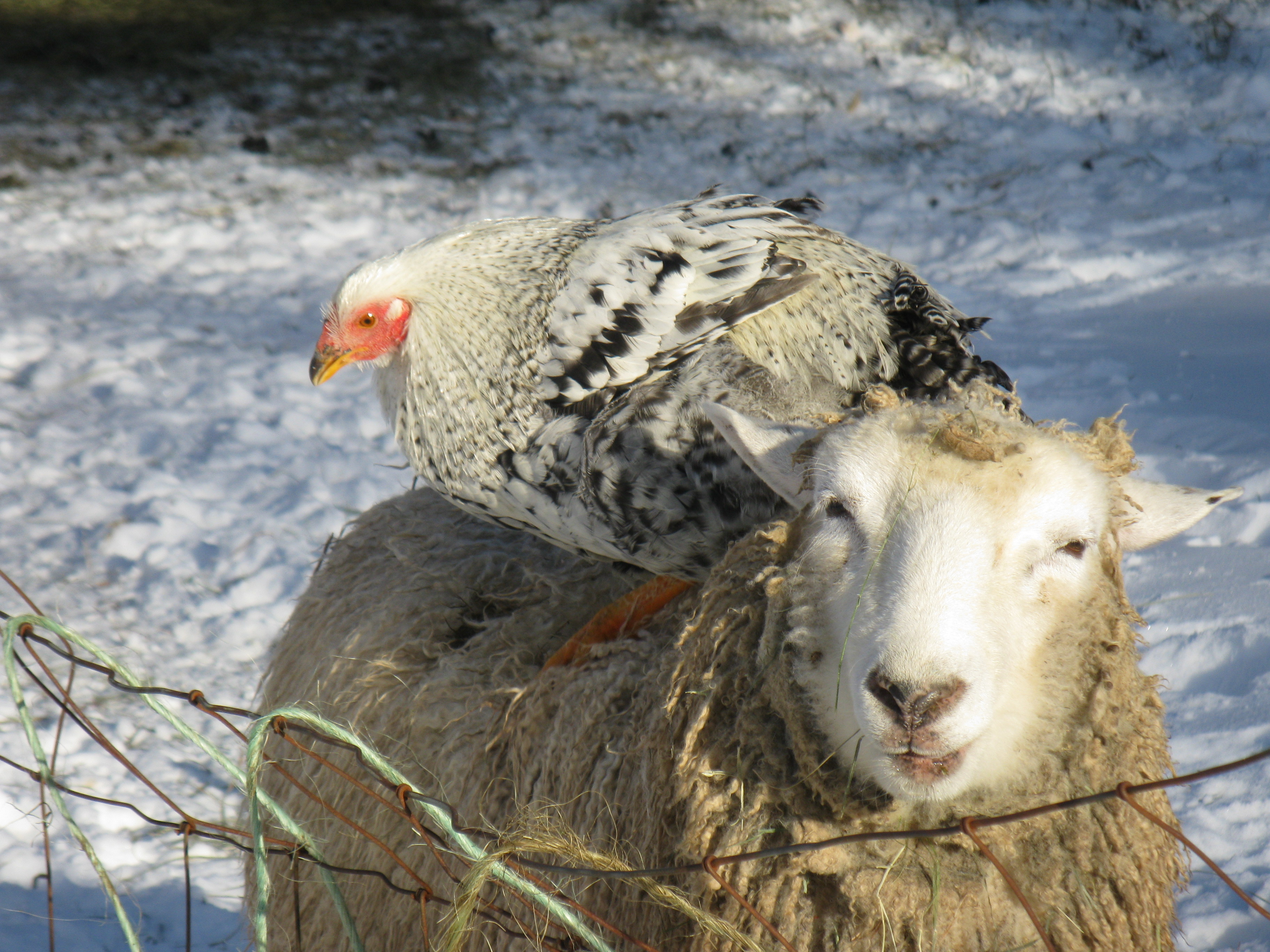
Ewelysses doted on her lamb. She stood up for it to nurse; when it was lying down, she stood over it and nudged it, insisting that it get up and nurse, like a mother coaxing a child to eat his spinach. Later, when I went out to check on them in the evening, I saw the lamb shivering as it slept beside her; Ewelysses moved closer and pressed her body against him. I saw the lamb climb up onto her back to nest on her fluffy wool fleece. That is how they’ll sleep together during a cold winter night.

Both of the lambs were doing fine. But we worried. Temperatures were expected to fall to twenty-below that night. We had never had new lambs arrive in weather like that. Would they make it through the night?

They did.

Two-day old lambs with Ewelysses at breakfast.

Two-day old lambs with Ewelysses at breakfast.

Posted in lambing | Tagged | 1 Comment

Autumn at Ewetopia Farm

IMG_1852 IMG_1844

Posted in Uncategorized | Tagged , , , , , , , , , , | Leave a comment

Asterix

guatemala 210

Asterix

As farmers, we are not supposed to be sentimental about our animals, but we are.

Particularly about our bottle lambs – those lambs abandoned by their mothers, who we scoop up into our arms and care for like they were our babies. Asterix was a bottle lamb, born to a yearling ewe in April when the sheep were out on pasture and the dandelions and daffodils were in bloom. Sometimes a yearling ewe-mom will take good care of her first born but that is rare.

Asterix –  named after the Belgian anti-imperialist comic-strip hero,  who belonged to a small insurgent group of Gaulois who resisted the Romans invasions, confounding and defeating Caesar’s legions again and again– became our pet.

Espresso- and- cream colored, he followed us around everywhere, bounded up our front and back steps, and if the door was left open, he would prance right into the house where he would dance around, springing into the air and tapping his little hooves on the floor, his little tail trembling with happiness.

Lambs grow up to be aloof, not-so-cuddly and easily spooked, even the bottle lambs, but Asterix grew up to be a gentle werther, who liked to stand beside us and have his chin scratched like an old Golden Retriever.

We always intended to give him away; it was only after he bumped me a couple of times that we decided it was time. Then one day he rammed me in earnest– he came at me from behind and knocked me halfway across the paddock  – where I landed in a pile of shit. Then he backed up to come at me again. And again.

That was it.

That afternoon we offered him as a give-away on Craig’s list and right away we received several responses. Two days later, two large men showed up in a pickup truck to collect him. I had spoken with a woman on the phone, who told me that she and her husband raised goats and that her husband “just liked to watch the animals out on pasture.” I warned her that the ram could be aggressive. Her husband could handle that, she said. When the man showed up I was a bit relieved, as he was a giant of a man who was easily a match for poor old Asterix.

The man lifted Asterix onto the truck single-handedly and sealed him in a plywood box. The other man just watched. Neither of them looked like farmers. They did not ask any questions about the animal they had just adopted; they did not even ask his name. In truth, they acted as if they were taking him straight to the slaughter.

“He will need to be sheared soon,” Art said.

The man looked up at Art. It seemed to me that he had no intention of shearing him, and that the only “soon” for poor Asterix would be the butcher’s knife. I could hear Asterix through the plywood – his hoofs tapping on the cold metal bed of the truck – a new sensation for him – in his agitation.

I had decided that if someone wanted to take Asterix for slaughter then I would accept that. The animal posed a danger. Why else would anyone want him? Ewes can provide mowing services and wool, but without the menace. But that night I had nightmarish thoughts about his journey in the dark cab of the truck, having never been apart from his family and having never known any life but this one – here on these few acres. For Asterix the world was these pastures and the old barn, the shade of the elm tree and the willow, the hum of the road and the chickens.

Every winter, a few of our lambs are slaughtered right here on the farm, so that they never have to go through the trauma of being hauled on the back of a truck and then rough-handled by strangers at the slaughterhouse. Art is there to say goodbye to them. I stay inside the house and do not hear a thing, and when I go outside, I find the flock calmly picking through their hay or chewing their cud, as if nothing out of the ordinary has occurred.

But this, I fear, was not to be the end for poor Asterix.

Posted in Uncategorized | Tagged , | Leave a comment

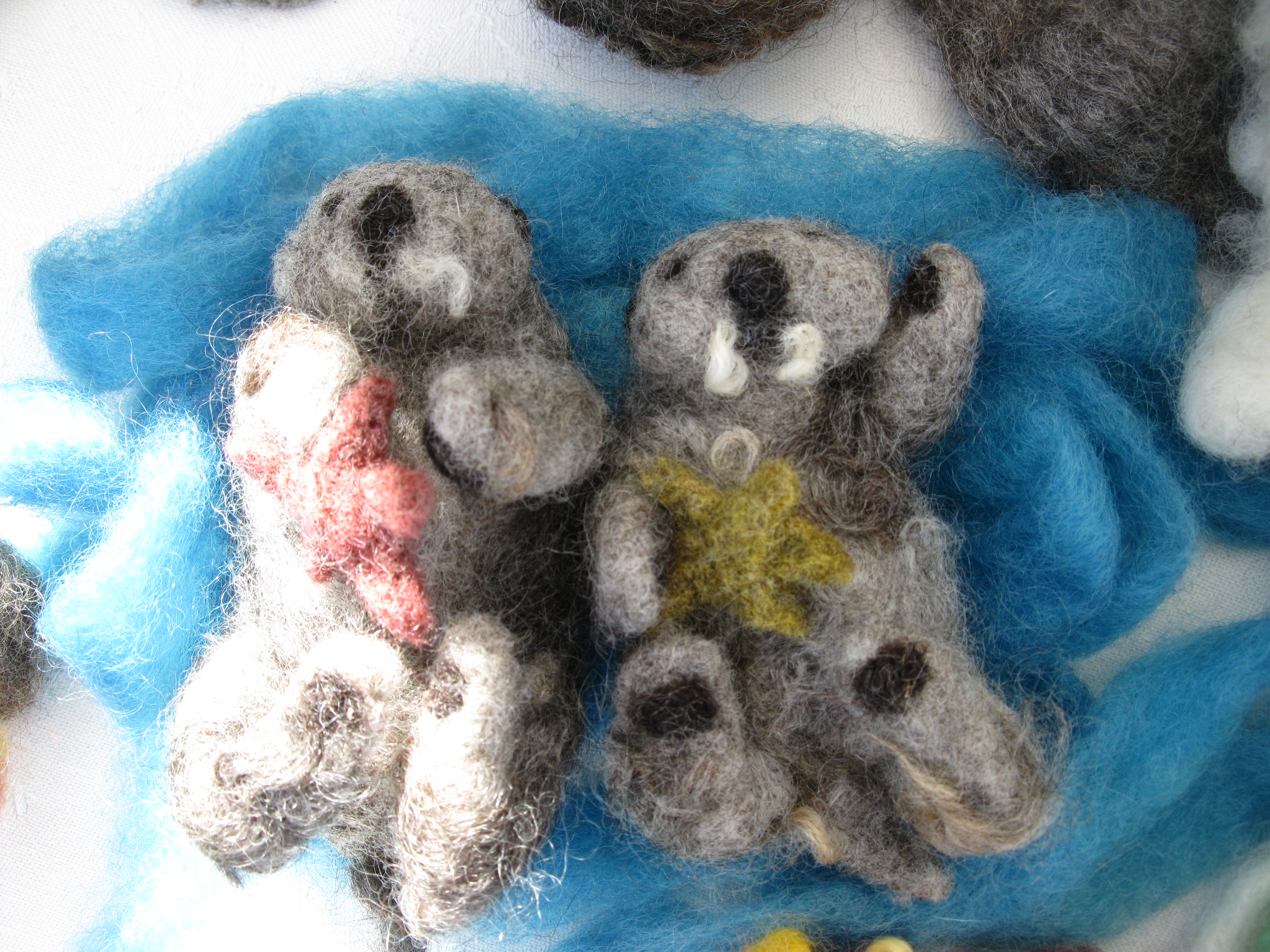
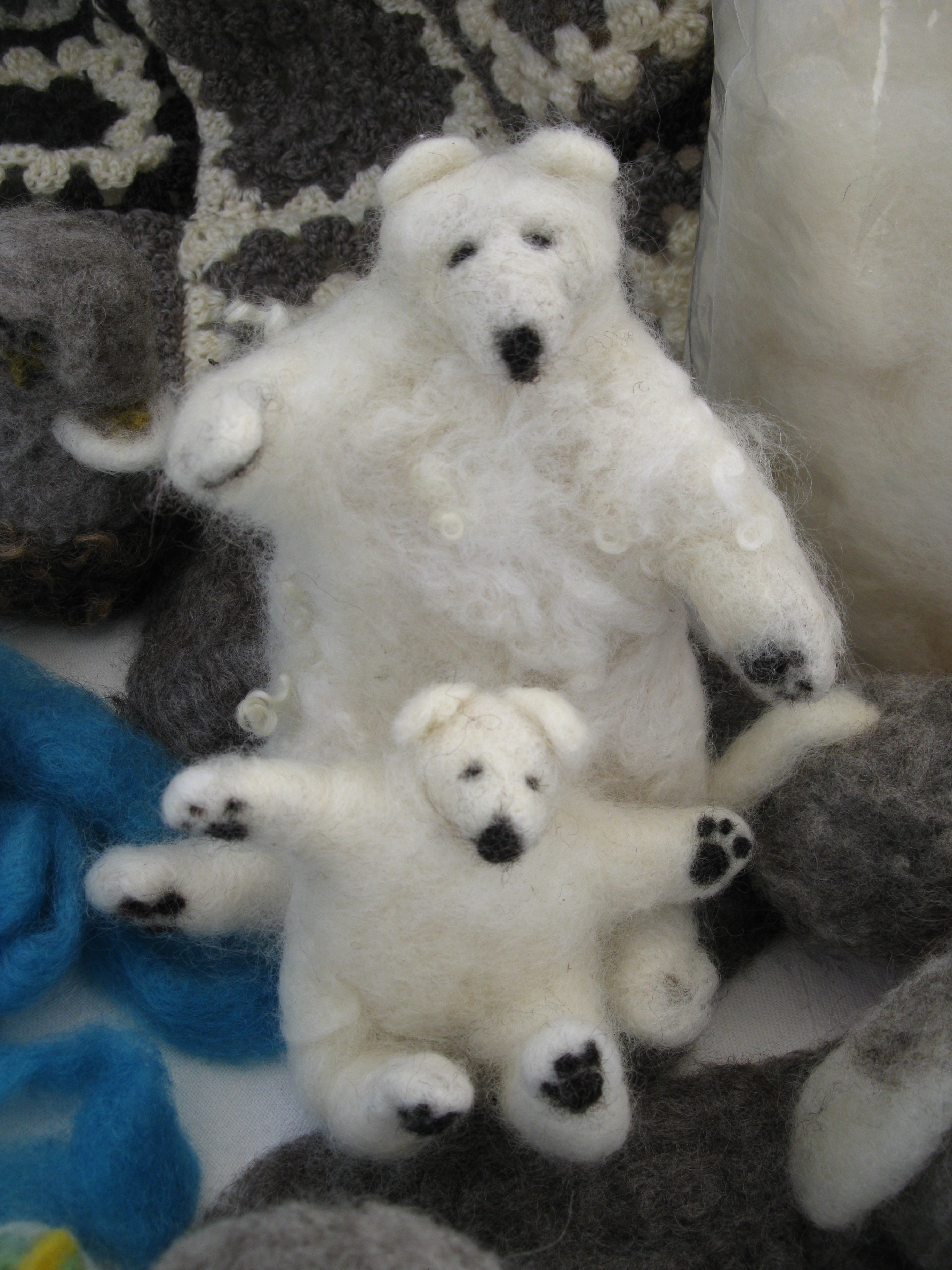
Needle felted animals

Our menagerie.

Our menagerie.

IMG_1774

IMG_1770

Otters.

Otters.

IMG_1765

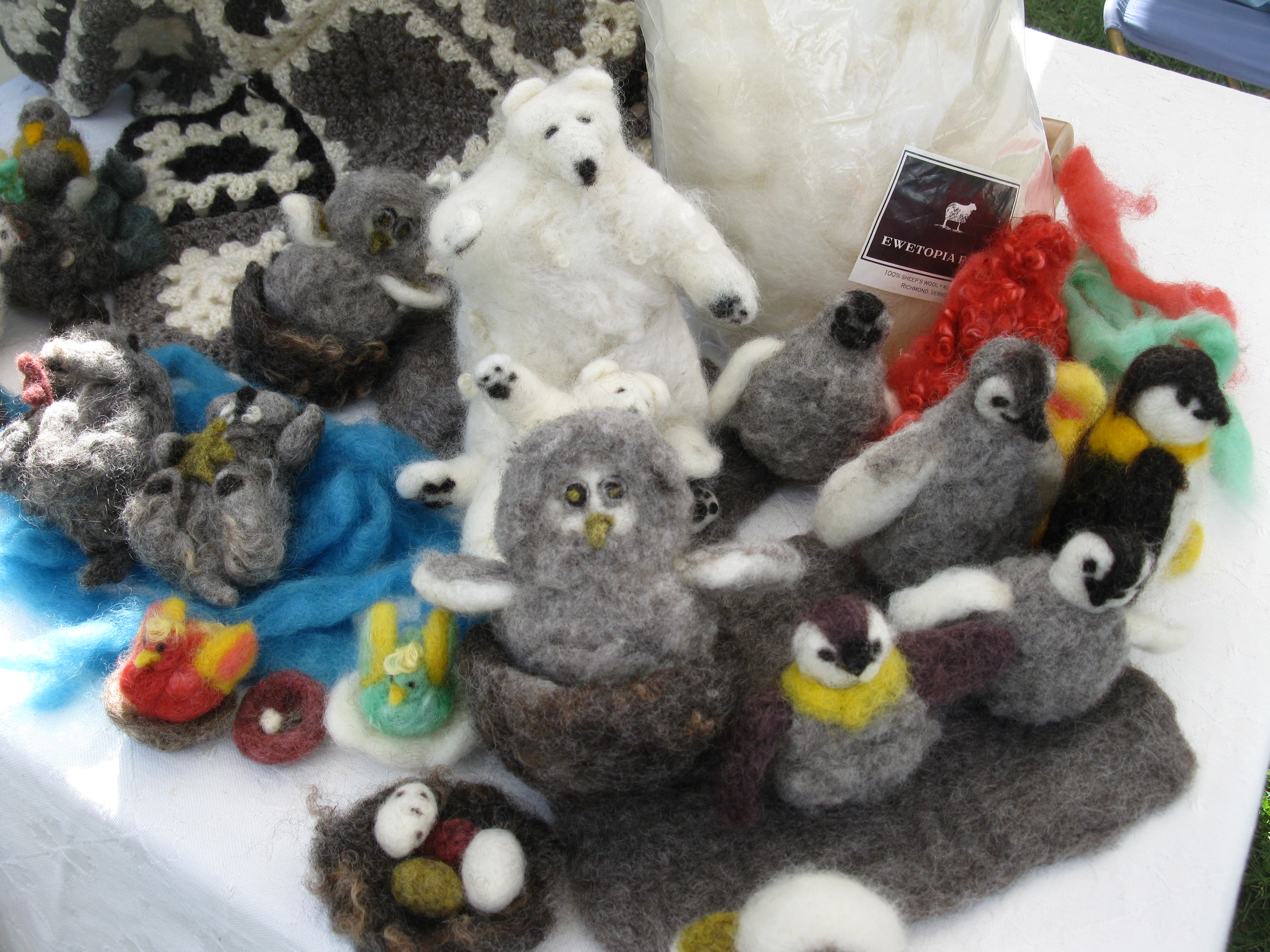
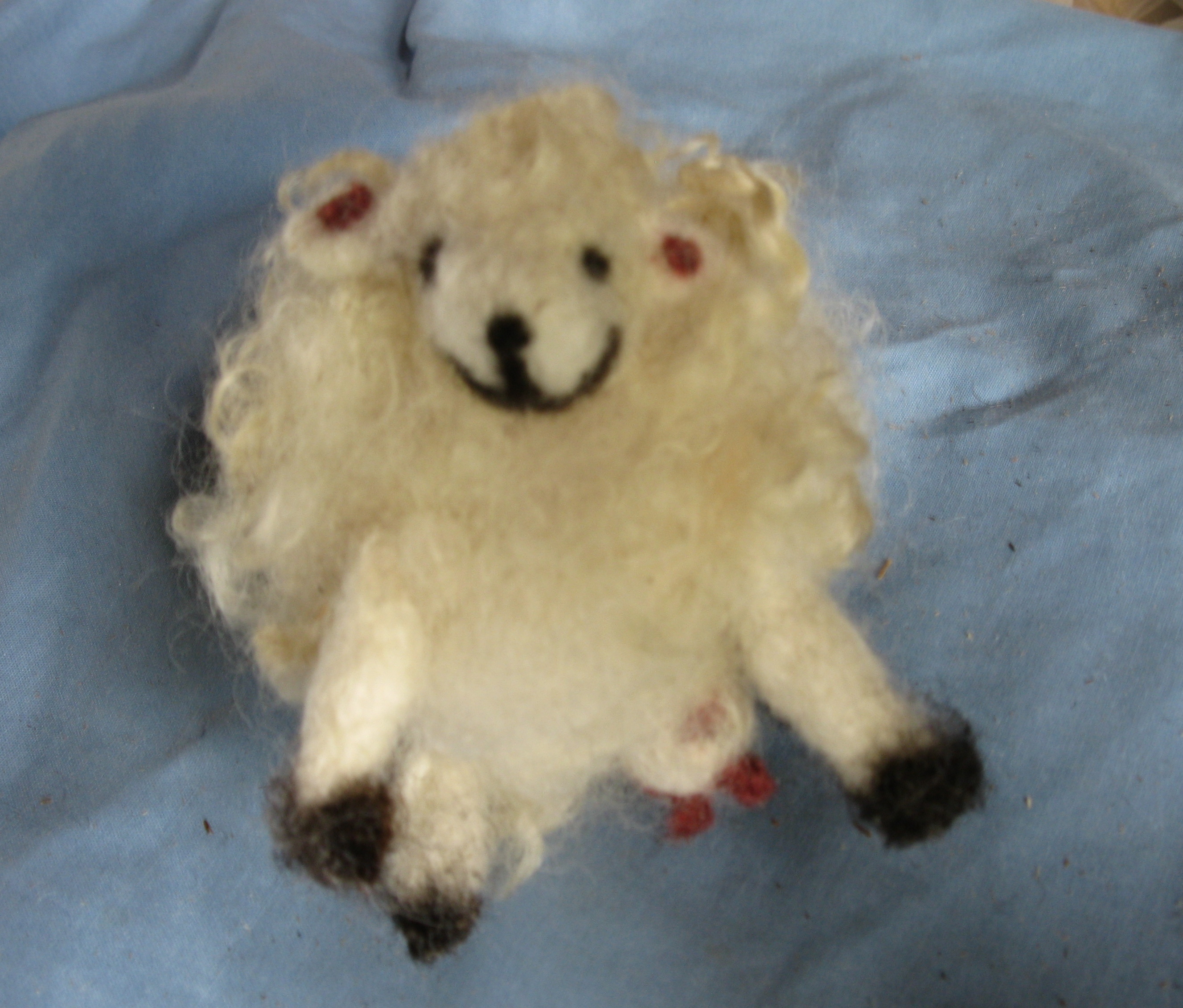
New from Ewetopia Farm: Needle Felted Animals.

We offer needlefelting kits with all the materials and instructions for making your own fluffy animals. Find us on Fridays at the Richmond Farmers Market.

Needle felted ewe

Needle felted ewe

Posted in felted sheep, needle felting, Uncategorized | Tagged | Leave a comment